
A Quiet Heartbreak Where Love Has Truly Died
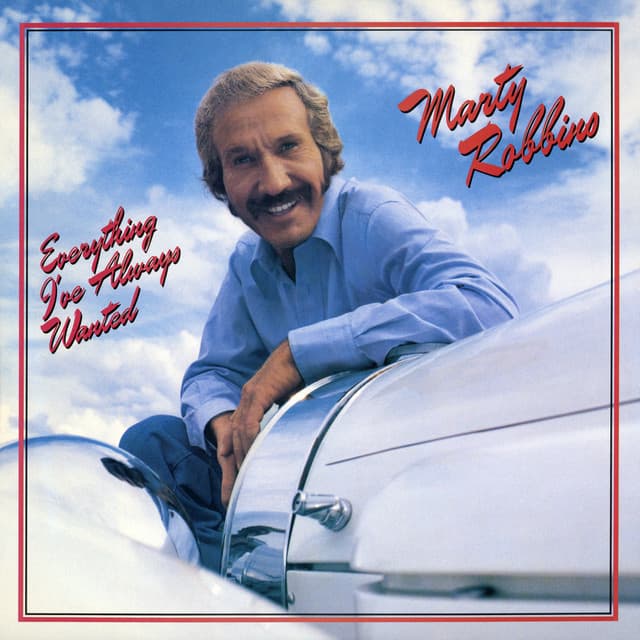
When Marty Robbins sang “Completely Out of Love,” he gave voice to the moment when two people realize their reservoir of devotion has run bone‑dry. Released as a single in 1981 from his album Everything I’ve Always Wanted, the song reached #47 on the Billboard Country chart, a modest peak but deeply resonant.
In the opening chord of Everything I’ve Always Wanted, Robbins settles into a more reflective terrain than his earlier frontier ballads. The production is lean but rich — sliding guitars, steady pacing, and his warm baritone carrying the weight of hard-won regret. On this record, released in January 1981, Robbins explores not just love, but its absence, memory, and the quiet despair of unbridgeable gaps.
At heart, “Completely Out of Love” is a confessional. The lyrics trace a relationship that once bristled with possibility — “we could always find tomorrow when a problem came our way” — yet has now ground to a halt, devoid of both future and past. Robbins constructs the emotional landscape with the kind of geographical metaphors that are simple but devastating: a mountain neither lover can cross, a valley where the sun never shines.
What makes the song so affecting is its honesty. Robbins doesn’t romanticize the end; there’s no one villain, no dramatic betrayal — just a slow, mutual depletion of affection, as if two people have dug a hole so deep together that they can’t climb out. “We buried them in this hole we both dug,” he sings, acknowledging shared responsibility.
Musically, the structure mirrors the emotional journey. The chord progression — rooted in traditional country but suffused with melancholy — gives his voice room to linger on each sorrowful syllable. The arrangement doesn’t embellish; instead, it lets space breathe, letting the listener feel the empty expanse between where the lovers once stood. Classic‑country chord charts show how Robbins uses simple but evocative harmonies to reinforce the song’s thematic emptiness.
In the broader context of Robbins’s career, “Completely Out of Love” stands as a late-period gem. While he’s better known for his vivid storytelling in western ballads like El Paso or outlaw tales, here he turns inward. As the closing era of his songwriting, captured on Everything I’ve Always Wanted, this song reflects a maturity of loss: not the dramatic gunfight or high-noon showdown, but the internal reckoning of two people who once believed they had forever.
The emotional core of the song lingers long after the final note. It’s not a defiant goodbye, nor a hopeful plea — it is a resigned admission. In Robbins’s world, to run “completely out of love” is not a momentary lapse but a final accounting. And by laying that truth bare, he crafts one of his most quietly devastating ballads — a testament to love’s fragility and the shadows left in its absence.