
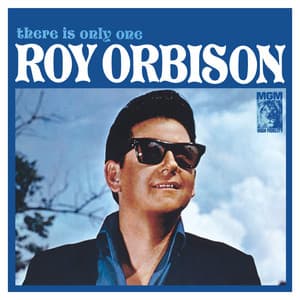
Blue Avenue is the quiet crossroads of heartbreak and resilience where a forlorn lover wanders until love’s echo returns.
In the luminous constellation of Roy Orbison’s early recordings, “Blue Avenue” occupies a curious and poignant niche. Issued in 1960 as part of his foundational LP Lonely and Blue—Orbison’s second studio album and his first full-length for Monument Records—the song was never released as a major charting single in its own right, nor did the album itself break into Billboard’s upper echelons despite the success of other tracks on the record. Yet its significance lies not in its absence from the charts, but in how it crystallizes the emotional and stylistic innovations that would define Orbison’s contribution to popular music.
From the opening bar of “Blue Avenue,” there is no ambiguity about the terrain we are entering: it is a soundscape of emptiness, even as a medium-tempo beat keeps the narrative moving forward. Penned by Orbison and his creative partner Joe Melson, the lyrics are stark in their simplicity and devastating in their affective clarity—lines like “Blue Avenue / where I spend my lonely days without you” read like a diary entry scrawled on the back of a postcard from a town no one wants to visit, much less call home.
It is tempting, in the context of Orbison’s oeuvre, to compare “Blue Avenue” with his monumental ballads—“Only the Lonely” or “Crying”—songs built on dynamic vocal leaps and operatic sentiment. But “Blue Avenue” is quieter in its heartbreak. Its lament is not so much a wail as it is a slow procession, like a lone figure making his way down a deserted street at dusk, each step echoing against the walls of memory. The song’s structure—a looping refrain that reinforces the narrator’s solitude—becomes a psychological blueprint for the experience of loss. Alone is not just a mood, but a geography.
What makes this track so compelling in the broader sweep of early 1960s rock and country-inflected pop is how Orbison’s voice carries both fragility and steel. He never relinquishes control; his phrasing suggests someone who has been emotionally disarmed yet refuses to surrender. Unlike many of his contemporaries who traded in brash bravado or dramatic melodrama, Orbison remained an observer of his own heartbreak, an elegist whose very restraint communicated volumes. His phrasing on “Blue Avenue”—measured, heartfelt, occasionally punctuated by that signature high register—serves as the emotional engine of the piece, making listeners feel they are walking beside him down that sorrow-soaked road.
Musically, the arrangement supports this narrative with understated elegance. Strings and subtle backing vocals provide a cushion of melancholy without overwhelming the rawness of Orbison’s vocal. The result is a sonic environment that feels both intimate and expansively lonely—an aural avenue that mirrors the song’s thematic concerns.
Although “Blue Avenue” may not have enjoyed the commercial spotlight of Orbison’s biggest hits, its legacy endures among aficionados as a testament to his unparalleled ability to transmute personal anguish into a shared human experience. In the canon of heartbreak songs, it stands not as a monument but as a quiet crossroads—an invitation to pause, reflect, and perhaps recognize one’s own footprints on that same forlorn street.