
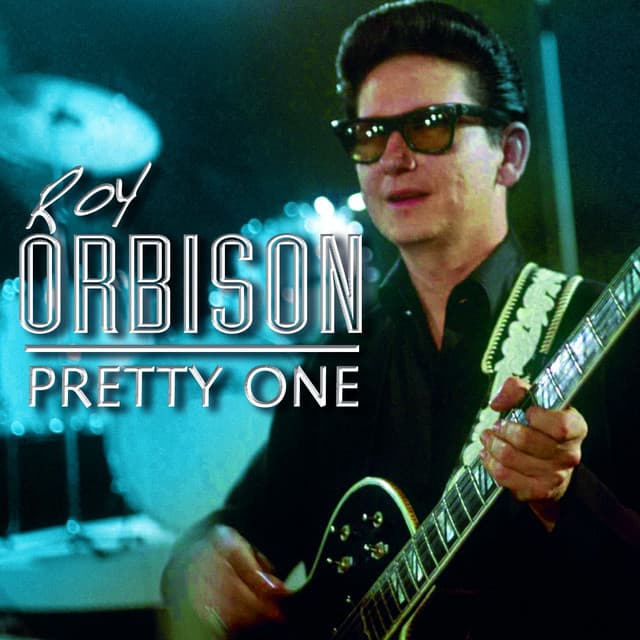
A quiet confession of tenderness, where love is not shouted but carefully held in the voice of a man who understands fragility.
When Roy Orbison released Pretty One, the song arrived not as a chart driven single but as part of the broader body of work gathered on The Classic Roy Orbison, an album that preserved many of his mid nineteen sixties recordings for attentive listeners rather than radio countdowns. Its presence on that record situates the song within Orbison’s most expressive period, a time when his commercial peak had already been secured and his artistic instincts were free to explore subtler emotional terrain. While Pretty One did not register as a headline chart performer, it occupies a meaningful place in the album’s emotional architecture, revealing another facet of an artist too often reduced to operatic heartbreak alone.
At its core, Pretty One is an exercise in restraint. Where Orbison was famous for his sky reaching crescendos and operatic climaxes, this song chooses intimacy over spectacle. The narrative voice does not plead or shatter. Instead, it speaks with the careful reverence of someone aware that affection can be both precious and precarious. The word pretty is not employed as a casual compliment. In Orbison’s hands, it becomes a symbol of emotional recognition, an acknowledgment of quiet beauty that exists beyond physical appearance.
Lyrically, the song unfolds as a gentle reassurance. There is no dramatic twist, no looming betrayal, no tragic farewell. That absence is precisely its power. Orbison frames love as something to be protected rather than conquered. Each line feels measured, as if spoken in a dimly lit room where raised voices might break the spell. This approach reflects a mature understanding of romance, one rooted in empathy rather than desire alone.
Musically, Pretty One leans on soft rhythmic motion and understated orchestration. The arrangement allows Orbison’s voice to remain close to the listener, intimate and unguarded. His phrasing is deliberate, almost conversational, yet unmistakably his. Even without the sweeping vocal leaps that defined songs like Oh Pretty Woman or Crying, the emotional authority remains intact. The control he displays here is a reminder that Orbison’s greatness was never dependent on volume or drama, but on emotional truth.
Within the context of The Classic Roy Orbison, the song serves as a moment of calm reflection. It bridges the grand emotional storms that surround it, offering a pause, a breath, a reminder that love is not always tragic or triumphant. Sometimes it is simply sincere. Over time, Pretty One has grown into a quiet favorite among devoted listeners, admired not for cultural ubiquity but for emotional honesty.
As The Vinyl Archivist, one comes to recognize that songs like Pretty One often age better than their more celebrated counterparts. They do not belong to a moment or a chart position. They belong to the private hours, to listeners who understand that the deepest emotions are often expressed in the softest voices.