
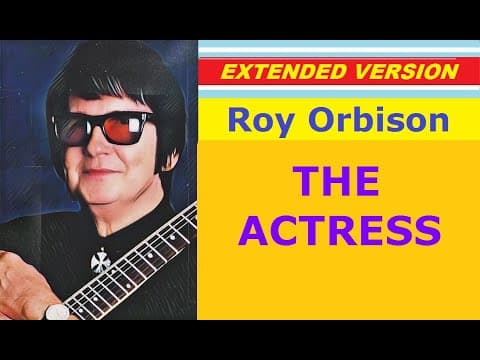
A quiet meditation on illusion, desire, and the loneliness that lingers behind the spotlight
Released during the peak of Roy Orbison’s Monument Records years, The Actress arrived as a non charting single that nevertheless found its place within the broader album landscape of his mid nineteen sixties work, a period defined by emotional ambition and vocal daring. Though it did not register on the major singles charts upon release, the song belongs unmistakably to the same artistic continuum that shaped his era defining albums, where intimacy and operatic sorrow coexisted without compromise.
What makes The Actress endure is not its commercial footprint but its psychological depth. Orbison was never merely a hitmaker. He was an architect of emotional spaces, and here he constructs one of his most subtly unsettling rooms. The song is framed around a woman who lives through performance, not only on a stage or screen but within her personal relationships. The actress of the title is not simply a profession but a condition. She survives by inhabiting roles, by controlling surfaces, by withholding her true self even from those who believe they love her.
Orbison’s vocal approach is restrained by his standards, and that restraint is precisely the point. He sings not with the volcanic release of his most famous recordings, but with a measured ache that suggests resignation rather than heartbreak. This is the sound of a narrator who understands that truth may never arrive, that intimacy has been replaced by spectacle. The melody drifts rather than climbs, mirroring the emotional stasis of loving someone who cannot step out of character.
Lyrically, The Actress reflects Orbison’s recurring fascination with emotional distance and unattainable love, themes that run like a quiet current through much of his catalog. Unlike his more dramatic narratives of loss and abandonment, this song explores a subtler wound. It is not the pain of being left, but the fatigue of being present with someone who is never fully there. The actress smiles, performs, reassures, yet remains unreachable. In this way, the song feels strikingly modern, anticipating later cultural conversations about identity, performance, and emotional authenticity.
Musically, the arrangement supports this tension with understated elegance. The instrumentation avoids flourish, allowing space for the vocal to breathe and for silence to speak. Each pause feels intentional, as though the song itself is hesitating, uncertain whether revelation will come or whether the curtain will simply fall again.
Within Roy Orbison’s body of work, The Actress stands as a reflective piece rather than a declaration. It does not demand attention. It earns it. Over time, listeners come to recognize it as one of those recordings that grows heavier with age, especially for those who have known the quiet disappointment of loving an idea rather than a person.
In the vinyl era, songs like this were often discovered late at night, needle resting deep in the grooves, when the world was quiet enough to listen. The Actress remains such a song. It does not shout its sorrow. It trusts the listener to find it, and in doing so, it reveals one of Orbison’s most mature and human reflections on love, illusion, and emotional distance.