
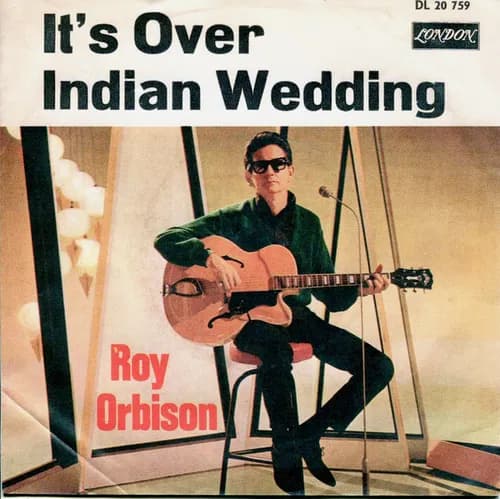
A haunting meditation on devotion and separation, where love becomes ritual and loss is sanctified by memory.
Released in 1970 on Roy Orbison’s album The Orbison Way, Indian Wedding arrived without the commercial machinery of a hit single and did not chart upon release. Yet its quiet presence within the album has endured far beyond chart positions, standing as one of Orbison’s most introspective and culturally evocative compositions. Nestled among songs that explored heartbreak, longing, and emotional restraint, Indian Wedding revealed an artist willing to step away from pop expectations and into a more contemplative, almost cinematic space.
At its core, Indian Wedding is less a narrative song than a tone poem. Orbison does not explain, resolve, or dramatize in the traditional sense. Instead, he observes. The song unfolds through imagery rather than plot, presenting a ceremonial moment that feels both ancient and deeply personal. The “wedding” becomes symbolic, not simply of union, but of transition, of a love moving beyond reach, sealed by tradition and time. Orbison sings not as a participant, but as a witness, someone standing just outside the circle, watching devotion harden into destiny.
Musically, the track is restrained and deliberate. The arrangement avoids grand crescendos, favoring a steady, almost processional rhythm. This choice mirrors the emotional posture of the narrator. There is no outcry, no operatic release. Instead, Orbison employs one of his most powerful tools: restraint. His voice, famously capable of shattering glass, here chooses to hover, to ache quietly. Each note feels measured, respectful of the ceremony it describes. Silence and space carry as much weight as melody.
Lyrically, Indian Wedding reflects Orbison’s recurring fascination with love that cannot be claimed. Throughout his catalog, love is often something observed at a distance, remembered after its passing, or mourned as inevitable loss. This song fits squarely within that worldview. The wedding is not celebratory. It is final. It marks the moment when hope gives way to acceptance, when personal longing bows to a larger order. There is dignity in that surrender, but also profound sorrow.
Culturally, the song reflects a period in Orbison’s career when he was exploring broader emotional and stylistic territory. The Orbison Way was an album less concerned with radio success and more invested in atmosphere and emotional continuity. In that context, Indian Wedding functions as a reflective pause, inviting the listener to sit with discomfort rather than escape it.
Over time, the song has become a quiet favorite among listeners who seek depth rather than spectacle. It rewards patience. It speaks to those moments when love is real, undeniable, and yet unreachable. In Indian Wedding, Roy Orbison offers no consolation, only truth. Love does not always end in possession. Sometimes, it ends in witnessing.