
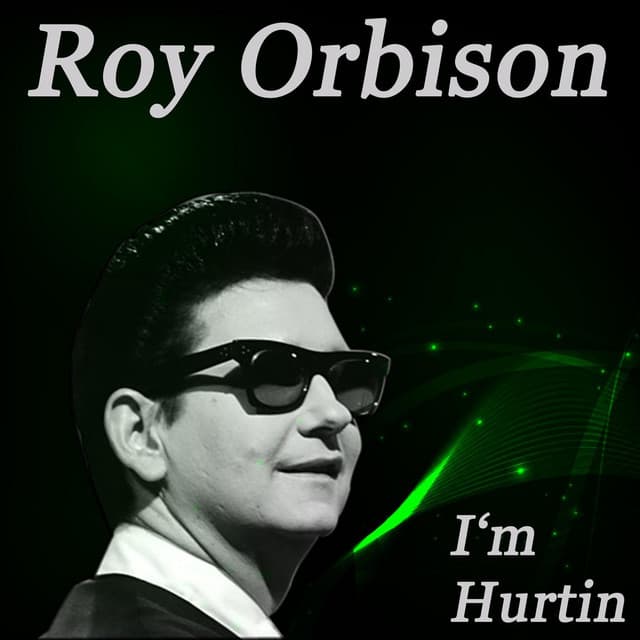
Wounded voice confessing that pride cannot outlast longing.
Upon its release in 1960, “I’m Hurtin’” by Roy Orbison rose into the American charts, peaking within the Billboard Hot 100 and confirming that Orbison’s ascent was no accident following his breakthrough success earlier that year. The song appeared on Lonely and Blue, an album that documented a crucial transition in his career, moving him away from conventional rockabilly structures and toward the emotionally expansive style that would define his legacy. By this point, Roy Orbison was no longer merely a promising singer. He was becoming a singular voice whose emotional intensity felt both private and monumental.
At its core, “I’m Hurtin’” is a study in restrained agony. Unlike many heartbreak songs of its era that relied on overt dramatics or moral resolution, this recording lingers in the moment of emotional injury itself. The narrator does not posture as the wronged hero or the betrayed victim seeking vindication. Instead, he admits vulnerability without adornment. The title phrase is not a metaphor or a clever turn of phrase. It is a blunt confession, delivered with a calm that makes it more unsettling. Orbison understood that heartbreak, when truly felt, often speaks quietly.
Musically, the song reinforces this emotional honesty. The arrangement is measured and deliberate, giving Orbison’s voice ample space to breathe and ache. The melody rises and falls with conversational intimacy rather than theatrical flourish, a choice that places the listener uncomfortably close to the singer’s inner world. This is not the operatic Orbison of later classics. This is a man holding himself together through sheer will, letting small cracks in his voice reveal everything he refuses to say outright.
Lyrically, “I’m Hurtin’” confronts pride as both shield and prison. The narrator knows he should walk away. He understands the cost of staying emotionally exposed. Yet knowledge offers no protection against desire. This tension between rational restraint and emotional need would become one of Orbison’s defining themes, but here it is presented in its most naked form. There is no grand narrative arc, only the unbearable persistence of feeling. The song does not resolve because heartbreak rarely does.
Within the context of Lonely and Blue, this track serves as an early blueprint for Orbison’s artistic direction. The album repeatedly returns to solitude, longing, and emotional isolation, but “I’m Hurtin’” stands out for its refusal to romanticize pain. There is no beauty in the suffering being described. There is only truth. That honesty resonated with listeners then and continues to do so now because it feels lived in rather than performed.
In the broader cultural legacy of Roy Orbison, “I’m Hurtin’” may not carry the monumental recognition of his later masterpieces, yet it remains essential. It captures the moment when Orbison learned that emotional sincerity could be as powerful as vocal range. For those who listen closely, the song reveals an artist discovering that the most enduring heartbreaks are not shouted. They are whispered, endured, and remembered long after the music fades.