
A country star turns the season inward, trading spectacle for stewardship and letting Christmas mean responsibility as much as romance.
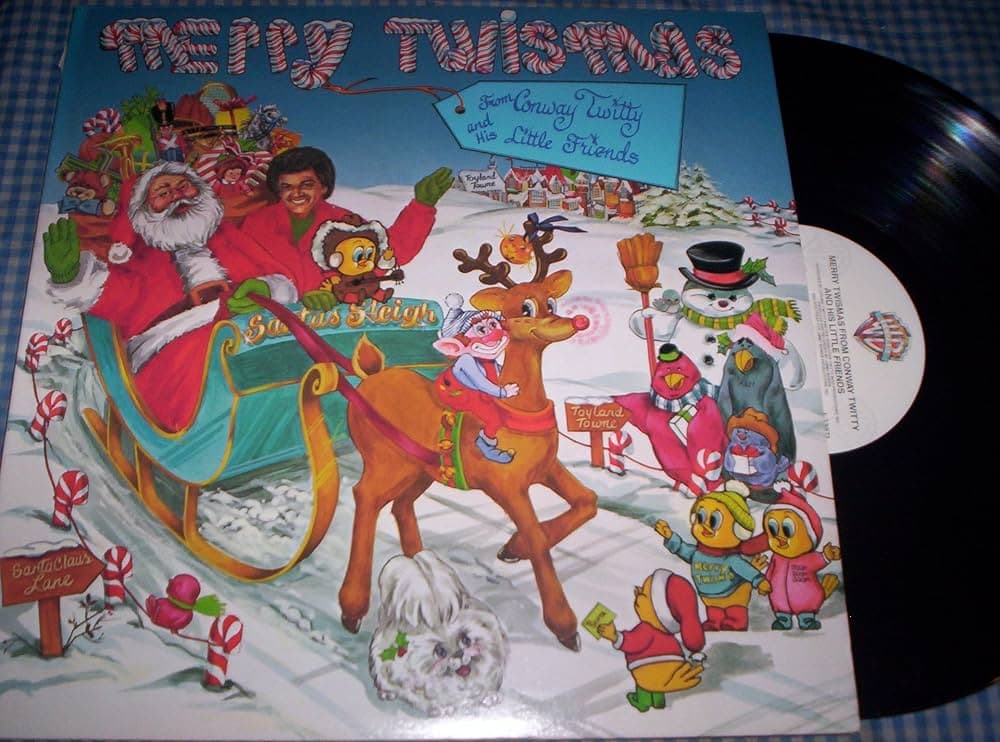
Released by Conway Twitty on the charity album Christmas for Kids, the title song arrived not as a conventional commercial bid but as a seasonal statement anchored to purpose. The record was issued under Twitty’s own imprint and circulated primarily through benefit channels rather than mainstream single promotion, meaning its life was measured less by chart ascent than by reach and impact. In that sense, Christmas for Kids stood apart from the artist’s long line of chart topping country hits, functioning as a philanthropic extension of his career rather than a competitive entry on the Billboard listings. It was music aimed outward, tied closely to Twitty’s personal initiatives and the community he built around Twitty City, his Hendersonville complex that served as home base, creative hub, and charitable engine.
To understand the gravity of Christmas for Kids, one must situate it within the arc of Twitty’s persona at the turn of the nineteen eighties. By then, he was already an institution. His voice was instantly recognizable, his catalog dense with songs about longing, fidelity, and moral consequence. Christmas music, in lesser hands, often flattens an artist into sentimentality. Twitty instead used the season to sharpen his sense of duty. The song does not hinge on snow globe nostalgia or romantic candlelight. Its emotional center is responsibility. Children are not symbols here. They are the reason the holiday exists at all.
Musically, the track leans into restraint. The arrangement favors warmth over flourish, allowing Twitty’s baritone to carry the message with a preacher’s calm rather than a crooner’s gloss. There is a deliberate plainness to the phrasing, a choice that aligns with the song’s ethical posture. Christmas, the song insists, is not something to be consumed. It is something to be upheld. Twitty sings not as a man seeking comfort but as one issuing a reminder, almost a gentle admonition, that joy without care is hollow.
The cultural legacy of Christmas for Kids is inseparable from Twitty’s off record actions. Proceeds from the project were directed toward children’s causes, reinforcing the authenticity of the song’s message. This was not charity as branding. It was charity as continuity. Twitty City itself became synonymous with generosity during the holidays, hosting events and fundraising efforts that extended the song’s sentiment into lived practice. In that way, the music functioned as an invitation rather than a performance.
For listeners revisiting the song today, its power lies in its refusal to age into kitsch. Conway Twitty does not ask us to feel young again. He asks us to be accountable. Christmas for Kids endures because it understands something essential about the season and about country music at its best. The songs that last are not always the ones that climb highest. They are the ones that tell us who we are supposed to be when no one is keeping score.