
A Lonesome Ballad Where the Sea Becomes a Mirror for the Heart
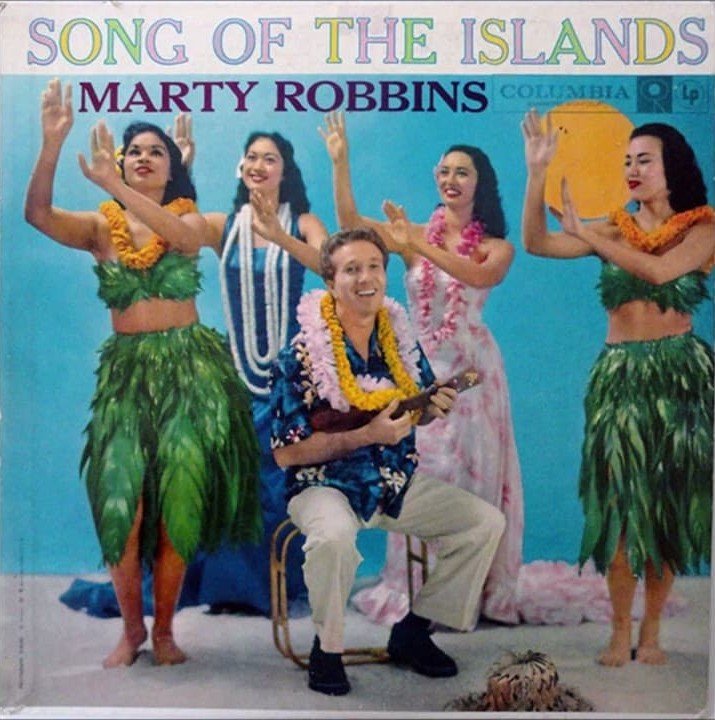
When Marty Robbins recorded “Song of the Islands”, he was not chasing the pop summit or country chart dominance that had crowned earlier triumphs like “El Paso.” Instead, he turned toward a different horizon. The song appeared on his 1965 album Song of the Islands, a project steeped in Hawaiian and South Seas romanticism, and though it did not storm the Billboard charts as a standalone single, it occupies a revealing place within Robbins’ expansive discography. By the mid 1960s, Robbins was already an established stylist, a singer whose voice could travel effortlessly from Western epics to torch ballads. This recording shows him navigating yet another emotional coastline.
Originally written by Charles E. King in 1915, “Song of the Islands” long predates Robbins’ interpretation. It is rooted in the American fascination with Hawaii in the early twentieth century, a fascination built on escapism, longing, and an almost cinematic sense of paradise. Robbins approaches the standard not as a novelty, but as a reverent custodian of its mood. His reading is unhurried, his phrasing deliberate, as though each syllable were carried ashore on a warm Pacific tide.
The emotional architecture of the song is deceptively simple. It is a serenade shaped by distance and yearning. The islands are not merely geographical; they become a metaphor for unattainable love, for a place that exists as much in memory and desire as in reality. Robbins’ vocal timbre, warm yet edged with restraint, gives the melody a dignified melancholy. He never oversings. Instead, he allows silence and space to speak between the lines. The result is intimacy rather than spectacle.
Musically, the arrangement leans into the gentle sway associated with Hawaiian stylings, likely incorporating steel guitar textures that ripple like sunlight on water. In Robbins’ hands, however, the exoticism never becomes caricature. He was a singer deeply attuned to mood, and here he balances romance with a subtle ache. The performance feels less like a postcard and more like a private confession whispered at twilight.
Within the broader arc of Marty Robbins’ career, “Song of the Islands” underscores his versatility. He was never content to be confined to one narrative tradition. If his Western ballads mapped the American frontier, this song charts an interior landscape of longing and dream. It reminds us that Robbins understood something essential about songcraft: that geography, whether desert or island, is ultimately a stand in for the terrain of the heart.
For the listener willing to linger, this recording becomes more than a period piece. It is an invitation to drift, to remember, and to feel the quiet pull of distant shores that may never be reached, yet remain forever vivid in the imagination.