
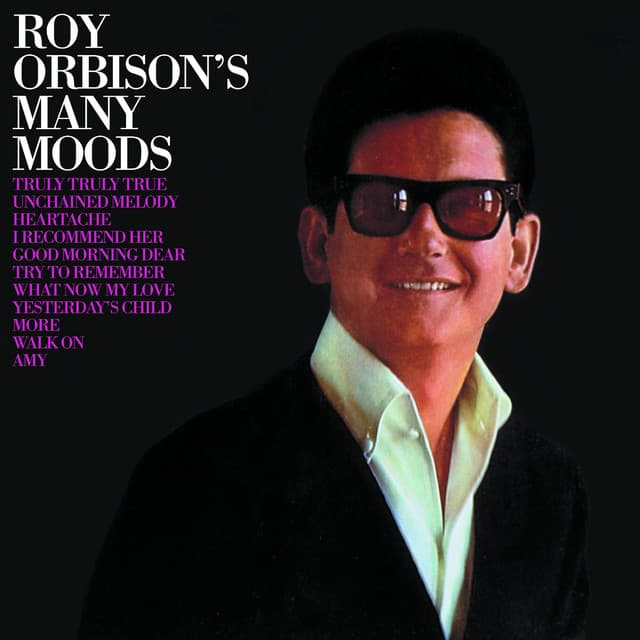
Young voice pledging absolute devotion, unaware that destiny would soon teach him the cost of such promises.
When Roy Orbison released Truly Truly True in 1956 on Sun Records, the song arrived quietly, without the immediate chart dominance that would later define his career. It did not register as a major national hit upon release, yet it secured Orbison his first meaningful foothold in the industry and placed him firmly within the emerging rockabilly and country crossover scene of the mid-1950s. Originally issued as a standalone single and later canonized on Roy Orbison at the Rock House, the recording would gain renewed attention decades later, including its restoration for modern listeners on remastered collections such as the 2015 release that preserves its raw, unvarnished spirit.
Truly Truly True captures Orbison at the very beginning of his artistic journey, before the operatic anguish, before the dark sunglasses became armor, before heartbreak became his defining language. Here, his voice is lighter, almost tentative, yet already unmistakable. What the song lacks in dramatic complexity, it compensates for with sincerity. The lyric is built on repetition, not as a compositional shortcut but as an emotional insistence. “Truly” becomes a vow spoken again and again, as if repetition itself might guarantee permanence.
The song’s narrative is simple: unwavering devotion offered without conditions. But simplicity, in Orbison’s hands, is never shallow. Beneath the straightforward pledge lies a fragile emotional architecture. The singer is not boasting of love’s triumph; he is pleading for its stability. Even at this early stage, Orbison instinctively understood love as something precarious, something that must be affirmed aloud to survive. That instinct would later evolve into the grand tragedies of Crying and In Dreams, but its emotional DNA is already present here.
Musically, Truly Truly True reflects the Sun Records aesthetic of its era: stripped-down instrumentation, a steady rhythmic pulse, and an emphasis on vocal clarity. There is little ornamentation, which allows Orbison’s phrasing to carry the weight. His voice rises and falls gently, not yet reaching for the operatic heights he would master, but already demonstrating an uncommon emotional precision. Each line feels carefully placed, as though he is learning, in real time, how to shape feeling into sound.
In retrospect, the song holds a quiet poignancy. Knowing what lay ahead for Orbison, both artistically and personally, Truly Truly True reads like a document of innocence. This is a man who still believes love can be secured by honesty alone. There is no bitterness here, no fear of abandonment, only faith. That faith, unguarded and open, would later be shattered and reforged into the sorrow-laden masterpieces that made him immortal.
Today, Truly Truly True endures not because it was a hit, but because it is honest. It stands as the first clear echo of a voice that would go on to define romantic suffering in popular music. In its modest ambition and earnest heart, the song preserves a rare moment: Roy Orbison, before the storm, singing as though love were still enough.