
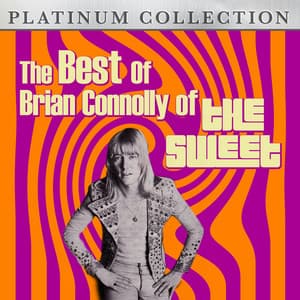
Glittering Cry for Youth That Echoed Beyond Its Time
When Brian Connolly returned to “Little Willy (Rerecorded)”, he was revisiting a song that had once burned bright in the pop firmament. The original version, recorded with Sweet, soared to No. 4 on the UK Singles Chart in 1972 and cracked the American Top 10, reaching No. 3 on the Billboard Hot 100. It appeared on the album Desolation Boulevard in the United States, a record that helped define the glam rock sheen of the mid-1970s. In revisiting the track years later, Connolly was not merely remaking a hit; he was re-entering a chapter of musical history that had shaped his voice, his image, and his place in the pantheon of glitter-era frontmen.
“Little Willy” has always been deceptively buoyant. Its handclaps, chanted chorus, and bright, almost bubblegum arrangement conceal a subtle urgency. At first glance, it is a simple pop confection—an anthem urging a restless boy not to run away from love, from life, from possibility. But beneath the sugar rush lies something more fragile: a portrait of youthful impulsiveness teetering on the edge of disillusionment. The lyrics plead and coax, framing Willy as both hero and cautionary figure. Stay. Hold on. Don’t throw it all away.
Connolly’s original vocal performance carried a tensile blend of bravado and vulnerability. His high, ringing tenor sliced through the layered guitars with theatrical flair, yet there was always a tremor beneath the gloss. Glam rock thrived on artifice—platform boots, glittered cheeks, exaggerated gestures—but it also provided a stage for real emotional exposure. In “Little Willy,” the tension between image and sincerity becomes the song’s beating heart. The chorus feels communal, almost tribal, as if the entire audience is enlisted to rescue Willy from himself.
By the time Connolly rerecorded the track, the cultural landscape had shifted. Glam’s initial blaze had cooled, and the industry had grown less forgiving. A rerecording, in that context, can feel like reclamation. It is an artist reclaiming authorship over a moment that the machinery of fame once amplified and then moved past. Connolly’s later voice, shaped by years of triumph and hardship, lends the song a different patina. Where the original sparkled with youthful defiance, the rerecorded version carries a faint shadow of retrospection. The plea in the chorus sounds less like adolescent encouragement and more like a man addressing his own reflection across decades.
“Little Willy” endures because it captures a universal crossroads: the split second between flight and commitment. It is pop music as lifeline, dressed in glitter but grounded in truth. In Connolly’s hands, both then and later, it becomes more than a hit single. It becomes a time capsule of innocence, ambition, and the cost of shining too brightly, too soon.