
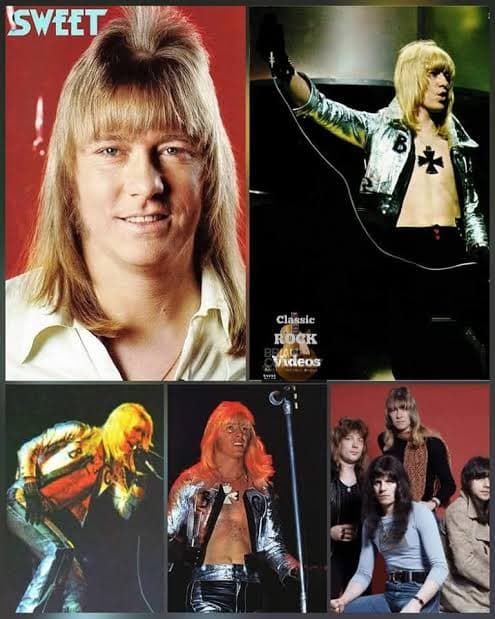
A Fading Idol’s Defiant Cry for One More Night in the Spotlight
Released in 1980, “Let’s Go” marked a poignant solo statement from Brian Connolly, once the unmistakable voice of The Sweet. Issued after his departure from the band that had defined much of his public identity, the single did not replicate the towering chart triumphs of his earlier years with The Sweet, whose glitter-streaked anthems had dominated UK and European charts throughout the 1970s. Instead, it arrived as a modestly received release in a changing musical landscape, detached from a blockbuster album cycle and standing largely on the strength of Connolly’s name and history. Yet commercial performance tells only part of the story. The deeper narrative resides in the voice itself, weathered and resolute.
By 1980, the era of platform boots and high-gloss glam was fading. Punk had already detonated its rebellion, and new wave’s sharper edges were redefining pop immediacy. Connolly, whose crystalline tenor had once soared effortlessly through hits like “Ballroom Blitz” and “Fox on the Run,” was confronting not only industry shifts but personal trials that had altered his instrument. A well-documented on-stage altercation in the mid-1970s had damaged his vocal cords, leaving his once agile upper register roughened, fragile, and unpredictable. In that context, “Let’s Go” resonates as more than a title. It feels like an insistence against erosion.
Musically, the track carries vestiges of the glam rock propulsion that had made Connolly a star: driving rhythm, assertive guitar textures, and a chorus designed to rally rather than retreat. Yet there is an undercurrent of strain that gives the performance its emotional gravity. Where earlier recordings shimmered with youthful flamboyance, this one pulses with something harder won. The vocal timbre, slightly frayed, lends authenticity. It is the sound of an artist refusing to concede ground.
Lyrically, the song leans into movement and urgency. “Let’s go” is both invitation and command. It suggests momentum in the face of stasis, companionship in the face of isolation. For listeners aware of Connolly’s trajectory, the refrain acquires a biographical echo. It becomes a plea to audiences, to former bandmates, perhaps even to himself. Continue. Persist. Step back into the light.
There is a particular poignancy in hearing Connolly’s voice at this juncture. Fame had once seemed boundless, amplified by the theatricality of glam’s golden years. But rock history is rarely merciful to its brightest comets. “Let’s Go” stands as a document of transition, an artifact of resilience rather than dominance. It does not seek to recreate the glittering past. Instead, it captures the stubborn pulse of an artist determined to remain present.
For the seasoned listener, the song’s value lies not in chart positions but in context. It embodies the moment when myth yields to mortality, yet the performer still steps forward. And in that gesture, fragile yet fearless, Brian Connolly reminds us that rock and roll has always been about motion. Even when the spotlight dims, the instinct is the same: let’s go.