
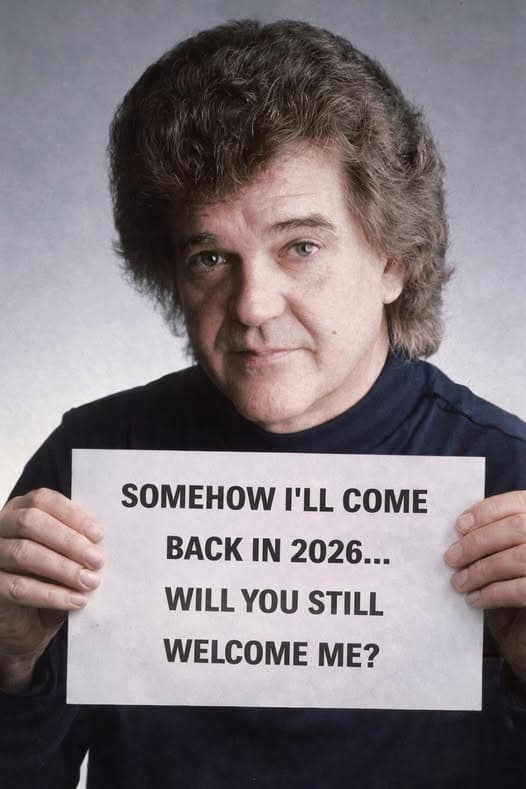
The quiet promise of a voice that once defined country heartbreak and still echoes beyond time
Few voices in country music carried the emotional gravity of Conway Twitty, an artist whose recordings shaped the emotional vocabulary of the genre for decades. Songs like “The Promise”, released during the later period of Twitty’s career and included on the album Final Touches in 1993, arrived at a poignant moment in his life and legacy. Although the song did not emerge as a major chart single upon release, its significance lies not in chart statistics but in the emotional context surrounding it. Recorded near the final chapter of Twitty’s life, “The Promise” stands today as a reflective piece from one of country music’s most enduring storytellers.
To understand the weight carried by “The Promise”, one must first understand the man behind the microphone. Conway Twitty had already spent decades shaping country music with a voice that blended tenderness and authority. From honky tonk ballads to deeply intimate love songs, he mastered the delicate balance between vulnerability and conviction. By the early 1990s, his career had become a monument to emotional storytelling, and every new recording felt like another page in a long personal diary written in melody.
“The Promise” captures this late-career reflection beautifully. The song revolves around a simple but powerful idea: commitment that endures even when time, distance, and hardship threaten to erode it. Twitty’s delivery does not feel like a young man making a declaration. Instead, it feels like the voice of someone who understands the full cost of a promise. Each line carries the gravity of experience, as if every word has already been tested by life itself.
Musically, the arrangement remains rooted in classic country sensibilities. Gentle instrumentation frames Twitty’s unmistakable baritone, allowing the emotion of the lyric to lead the performance. There is restraint in the production, a deliberate decision that lets the song breathe. The listener is drawn not to flashy musical flourishes but to the quiet sincerity of the vocal performance.
What makes “The Promise” especially moving is the historical perspective listeners bring to it today. When revisiting the song, one hears not just a recording but a moment preserved in time. Conway Twitty had already secured his place in country music history through decades of hits and collaborations, particularly alongside Loretta Lynn, yet songs like this remind us why audiences remained loyal to him long after the charts had shifted toward new sounds.
The emotional resonance of “The Promise” lies in its authenticity. Twitty was never an artist who needed elaborate metaphors or dramatic narratives. His power came from speaking directly to the human experience of love, regret, devotion, and memory. In this song, those elements converge into something quietly profound.
Listening now, “The Promise” feels almost like a conversation across time. The voice may belong to the past, but the emotion remains vividly present. It is the sound of a legend speaking softly yet firmly, reminding us that some promises outlive the moment they were spoken.