
A distant shore of longing where memory shimmers brighter than the life left behind
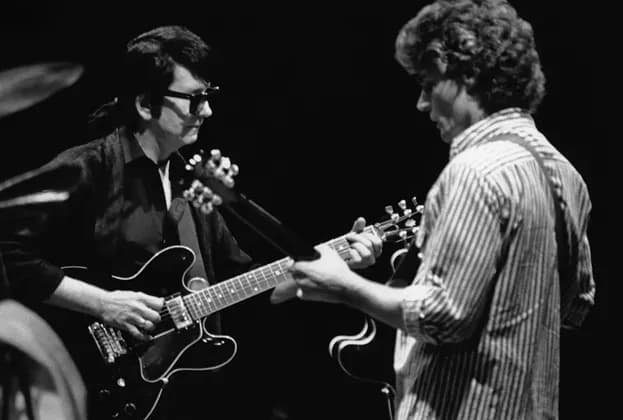
By 1973, when Roy Orbison brought Blue Bayou to the stage in live performance, the song had already secured its place as one of his most beloved recordings from the album In Dreams. Originally released as a single in 1963, it achieved notable chart success and became a defining example of Orbison’s ability to merge country, pop, and operatic emotion into a singular, unmistakable sound. A decade later, in the live setting, the song no longer functioned as a contemporary hit. It had become something deeper. A vessel for memory, both for the audience and for the artist himself.
At its core, Blue Bayou is a song of return. Not necessarily to a physical place, but to a state of being that exists somewhere between past and imagination. The bayou itself is less a geographic location than an emotional refuge. A place where simplicity, love, and belonging remain untouched by time. In Orbison’s hands, this longing is never overstated. It is carried with a quiet ache, a sense that the journey back may never truly be completed.
The 1973 live performance adds a crucial dimension to this narrative. Time has passed, and with it, the context in which the song was first recorded. Roy Orbison, standing before an audience that already knows the melody, approaches the song not as something to be introduced, but as something to be revisited. His voice, still remarkable in its clarity and control, carries an added depth. There is a maturity in the phrasing, a subtle shift that suggests lived experience has deepened the meaning of the lyric.
Musically, the live arrangement retains the essential structure of the original, yet allows for a greater sense of space. The tempo breathes more freely, and the instrumentation supports rather than replicates. This openness creates room for Orbison’s vocal to expand and contract naturally, emphasizing the emotional contours of the song. The famous crescendos, so central to his style, are present, but they feel less like displays of power and more like inevitable releases of feeling.
Lyrically, Blue Bayou speaks to a universal human impulse. The desire to return to something that feels safe, familiar, and complete. Yet it also acknowledges, quietly, that such places often exist more vividly in memory than in reality. This tension between desire and impossibility gives the song its enduring resonance.
Within the broader arc of Roy Orbison’s career, the live performance of Blue Bayou in 1973 stands as a testament to his ability to sustain emotional truth across time. He does not simply repeat the song. He reinhabits it, allowing its meaning to evolve alongside his own experience.
What lingers after the final note is not just the image of the bayou, but the feeling it represents. A distant, almost unreachable sense of peace. And in that quiet longing, Roy Orbison reminds us that some places are not meant to be found again, only remembered, and in that remembrance, they remain alive.