
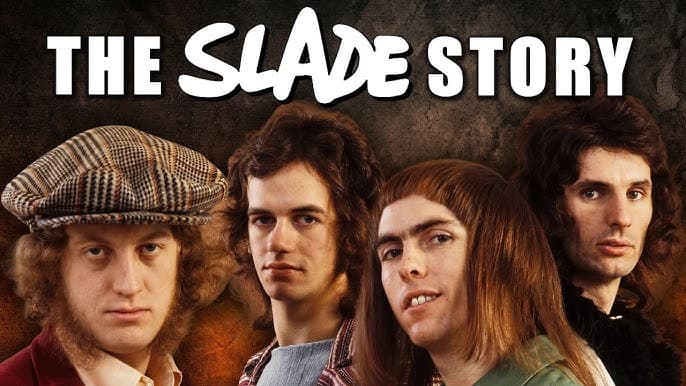
Fame Came Roaring Through the Speakers, but Silence Waited Behind the Curtain
By the early 1970s, Slade had become one of Britain’s most unstoppable rock phenomena, a working-class juggernaut whose string of hit singles dominated the UK charts with astonishing force. Songs like “Cum On Feel the Noize,” “Mama Weer All Crazee Now,” and “Merry Xmas Everybody” transformed the band into household names, while albums such as Slayed? and Old New Borrowed and Blue captured the raw electricity of a group that seemed born directly from the sweat and noise of the British concert circuit. At their peak, Slade rivaled the biggest acts of the glam rock era, not through theatrical mystique, but through something far more difficult to manufacture: absolute connection with ordinary people. They sounded like factory towns, football terraces, crowded pubs, and Friday nights that existed to forget the exhaustion of the week.
Yet the story of Slade is one of rock music’s great emotional contradictions. Beneath the thunderous singalongs and the grinning bravado stood a band whose legacy became strangely overshadowed by changing trends, industry neglect, and the cruel instability of fame itself. Their rise was explosive. Their decline was painfully human.
What separated Slade from many of their contemporaries was their refusal to posture as untouchable rock aristocracy. Noddy Holder’s unmistakable roar carried both celebration and desperation at once, while Jim Lea’s musical instincts gave the band a melodic intelligence often ignored by critics who dismissed them as mere glam-rock hooligans. Their records were loud, unpolished, and gloriously alive, but beneath the stomping rhythms there was craftsmanship of the highest order. The hooks were not accidents. They were engineered with precision, built to erupt from radios and pub jukeboxes alike.
Their manager, Chas Chandler, understood something fundamental about post-1960s Britain: audiences no longer wanted distant stars floating above them. They wanted musicians who looked like they came from the same streets they did. Slade embraced that identity completely. The misspelled song titles, the roaring gang vocals, the heavy boots and mirrored hats all became part of a larger mythology rooted in accessibility rather than fantasy. In many ways, they were the people’s rock band.
But popular culture rarely rewards permanence. By the late 1970s, glam rock had begun to fade under the rise of punk and new wave. Bands once treated like national treasures suddenly looked unfashionable almost overnight. Slade struggled against this changing climate, particularly in America where success remained frustratingly inconsistent despite relentless touring. Financial pressures, internal exhaustion, and shifting musical tastes slowly eroded the momentum they once carried so effortlessly.
There is a tragic dimension to their story not because they disappeared, but because their influence became strangely disconnected from their recognition. Future generations of hard rock and metal bands borrowed heavily from Slade’s blueprint. The anthemic choruses, the rough-edged energy, the communal spirit of audience participation all echoed through later acts from glam metal to Britpop. Even Quiet Riot’s massive American success with “Cum On Feel the Noize” served as a bittersweet reminder that songs born from Slade’s identity could become enormous hits in someone else’s hands.
And yet, listening now, the emotional power of Slade feels untouched by time. Their music carries the sound of joy fighting against disappointment. It is loud because life was uncertain. It is celebratory because working people understood how fragile celebration could be. That tension is what still gives their records heartbeat decades later.
The tragedy of Slade is not that they failed. It is that one of Britain’s greatest rock bands became remembered too often as a footnote to an era they helped define. Beneath the glitter and noise stood musicians who translated ordinary struggle into extraordinary sound, and in doing so, gave 1970s Britain one of its most honest voices.