
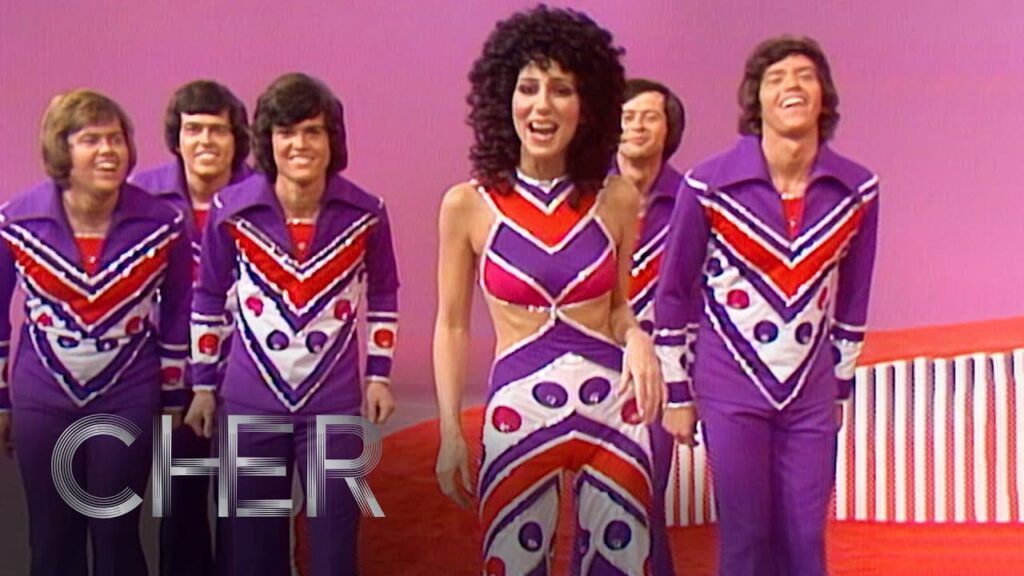
A family pop phenomenon stepped into the soul of Stevie Wonder and revealed the restless heartbeat beneath polished television glamour
By February 1975, The Osmonds had already lived several musical lives. Teen idols, television regulars, harmony craftsmen, and ambitious crossover performers, they arrived on The Cher Show carrying both the burden and excitement of reinvention. Their performance of the Stevie Wonder Medley came during a period when American pop music was rapidly shifting beneath the feet of established acts. Soul music had become more sophisticated, funk rhythms more daring, and artists like Stevie Wonder were redefining what mainstream music could sound like emotionally and structurally. For The Osmonds, whose success had been built largely through clean-cut pop and carefully arranged harmonies, this medley was more than a television segment. It was a public declaration that they were listening closely to the changing sound of the decade.
The performance itself was not tied to a major charting single in the traditional sense, nor was it released as a defining standalone hit from one of their studio albums. Instead, it existed in that fascinating space television once occupied during the 1970s: a temporary cultural event capable of capturing an artist at a crossroads. And crossroads define this performance completely.
What makes the medley remarkable is not simply that The Osmonds covered Stevie Wonder songs. Many artists did. What makes it compelling is the tension visible beneath the choreography and bright studio lights. They were attempting to bridge two worlds that rarely sat comfortably together. On one side stood the highly polished American variety-show tradition represented by Cher, network television, and family entertainment. On the other stood the increasingly introspective and socially aware artistry of Stevie Wonder, whose music during the early 1970s had become deeply textured, spiritually searching, and rhythmically adventurous.
That contrast gives the performance its strange emotional electricity.
The medley pulses with urgency. Even through the controlled environment of television production, there is a clear sense that The Osmonds admired the emotional freedom embedded in Wonder’s music. Songs originally built from layered funk grooves and deeply personal expression suddenly passed through the disciplined machinery of a family vocal group trying to loosen its collar without entirely removing it. The result is fascinating precisely because it is imperfectly balanced. You can hear performers reaching toward something larger than image.
For audiences watching in 1975, this mattered more than modern viewers sometimes realize. Television variety shows were still central cultural gathering points. A performance on The Cher Show was not merely entertainment filler. It was branding, transformation, and survival. By that point, the teen-idol explosion that had carried The Osmonds through the early part of the decade was cooling. Rock audiences often dismissed them as manufactured, while younger listeners were beginning to move toward harder-edged sounds and more personal songwriting. Embracing the music of Stevie Wonder allowed them to align themselves, however briefly, with one of the most respected creative forces of the era.
Yet the performance also reveals something unexpectedly human about fame itself. Beneath the synchronized presentation lies a group of musicians trying to prove legitimacy in real time. The medley becomes less about imitation and more about aspiration. It reflects the universal fear of becoming outdated, the hunger to evolve, and the quiet desperation artists feel when the culture moves faster than their public identity.
Viewed decades later, the performance has gained a different kind of resonance. It now feels like a preserved fragment from an era when television still demanded polish but artists increasingly craved authenticity. That tension shaped much of 1970s popular music. The Osmonds may never have possessed the revolutionary creative authority of Stevie Wonder, but during this medley they revealed something equally compelling: vulnerability hidden inside professionalism.
And that is often where the most revealing moments in pop history are found.