
A Song About Carrying Each Other Through Time, Fame, and Silence
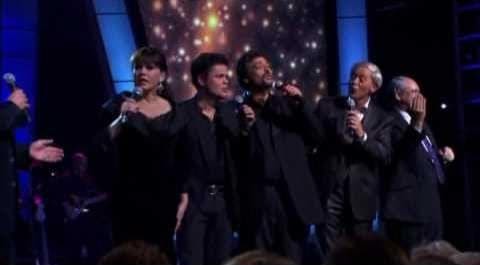
When The Osmonds returned to perform He Ain’t Heavy, He’s My Brother during the 50th Anniversary Reunion Concert, they were not simply revisiting a classic song. They were standing inside the weight of their own history. Originally associated with The Hollies, whose 1969 recording became an international hit and reached the Top 10 in both the UK and the United States, the song had long existed as one of popular music’s great meditations on loyalty, sacrifice, and unconditional love. In the hands of The Osmonds, however, it gained an additional dimension: autobiography. Performed decades after their years as teen idols and chart-dominating entertainers, the song became less about metaphor and more about lived experience.
For audiences who grew up watching the family rise from clean-cut television regulars into global stars during the 1970s, the reunion performance carried unusual emotional gravity. The Osmonds were never merely a pop act. They represented an era when family harmony itself was marketed as virtue: disciplined, polished, deeply synchronized. Yet behind the bright choreography and commercial success was a life defined by relentless touring, public scrutiny, shifting musical trends, and personal trials that unfolded far beyond the stage lights. By the time they sang He Ain’t Heavy, He’s My Brother, the lyric no longer sounded idealistic. It sounded earned.
The power of the song has always rested in its refusal to dramatize devotion. Its language is remarkably restrained. There are no grand declarations, no ornate poetic devices trying to overwhelm the listener. Instead, the song moves quietly, almost conversationally, through the emotional architecture of responsibility. “His welfare is my concern” remains one of the most understated yet devastating lines in popular music because it frames love not as passion, but as duty willingly embraced. That distinction matters. The song understands that genuine care often appears not in moments of triumph, but in endurance.
What made the reunion performance particularly affecting was the visible passage of time etched into the voices themselves. Youthful harmonies once driven by precision had matured into something rougher and more vulnerable. That vulnerability gave the performance its authority. Many reunion concerts rely on nostalgia alone, but this interpretation carried the emotional texture of survival. Every line seemed to acknowledge the years between then and now: the changing industry, the fading hysteria of fame, the personal losses, and the quiet persistence of family bonds.
Musically, the arrangement retains the solemn dignity that made the composition timeless in the first place. The slow-building orchestration never rushes toward catharsis. Instead, it allows emotional tension to accumulate gradually, mirroring the burdens the lyric describes. In performance, The Osmonds understood that restraint was the song’s greatest strength. They resisted embellishment and allowed the melody’s emotional honesty to carry the weight.
There is also something profoundly moving about hearing a family sing these words after spending a lifetime together in public view. Popular music history is filled with fractured groups and broken partnerships, yet The Osmonds returning to this song decades later transformed it into a reflection on brotherhood itself. Not the glamorous version sold in magazines, but the complicated, enduring kind shaped by obligation, forgiveness, and shared memory.
That is why this performance lingers long after the applause fades. It is not merely a celebration of legacy. It is a reminder that some songs grow older alongside the people who sing them, gathering deeper meaning with every passing year. In that moment, He Ain’t Heavy, He’s My Brother ceased to be just a beloved standard and became something rarer: a testimony.