
A Wild Heart Cornered by Desire and Defiance
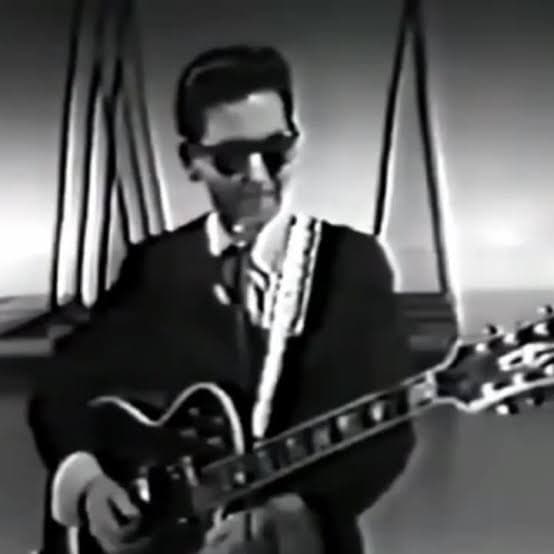
When Roy Orbison stepped onto the stage for his celebrated 1965 Monument concert performances, he was already standing at the summit of popular music. By then, he had built a remarkable run of chart successes through songs like “Only the Lonely,” “Crying,” and “Oh, Pretty Woman,” many of them released through Monument Records and later collected across landmark albums such as Crying and In Dreams. Yet among the grand ballads and operatic heartbreak that defined Orbison’s legend, “Mean Woman Blues” revealed another side entirely — raw, rhythmic, dangerous, and deeply rooted in the rockabilly spirit that first carried him out of Texas in the 1950s.
Originally written by Claude Demetrius and famously recorded by Elvis Presley for the 1957 film Loving You, “Mean Woman Blues” was already a hard-driving piece of American rock ’n’ roll mythology before Orbison ever touched it. But Orbison’s interpretation during the Monument era transformed the song into something more jagged and emotionally volatile. Where Presley delivered swagger and youthful rebellion, Orbison approached the composition with tension simmering beneath control — the sound of a man fascinated and exhausted by desire at the same time.
This distinction matters because Orbison’s artistry was never built on simple bravado. Even in his fastest recordings, there was always vulnerability hidden beneath the rhythm. Listening to “Mean Woman Blues” in the context of the 1965 concert performance feels almost like hearing two eras of American music colliding. The rockabilly pulse of the 1950s crashes against the dramatic emotional architecture Orbison perfected in the 1960s. His voice, unmistakably operatic even in uptempo material, gives the song a darker gravity than many earlier versions.
The lyrics themselves are deceptively straightforward: a man overwhelmed by a woman whose intensity borders on destructive. But Orbison’s phrasing adds layers the text alone does not provide. He does not merely sing about attraction; he sounds trapped inside it. Every sharp vocal accent carries urgency, and every rhythmic break feels like an emotional recoil. This was Orbison’s rare ability — to make even a seemingly simple rock song feel psychologically haunted.
Musically, the performance thrives on momentum. The pounding piano lines, snapping percussion, and aggressive guitar work create an atmosphere closer to a runaway train than a polished pop single. Yet Orbison never loses command of the arrangement. He rides above the chaos with astonishing precision, his voice balancing power and restraint in equal measure. That contrast became one of the defining traits of his career: the ability to sound emotionally shattered while remaining technically flawless.
By 1965, rock music itself was changing rapidly. The British Invasion had transformed the commercial landscape, and many early rock pioneers struggled to maintain relevance. Orbison, however, occupied a unique position. He was respected not merely as a hitmaker but as a singular vocalist whose emotional sophistication transcended trends. Performances like “Mean Woman Blues” reminded audiences that beneath the dark sunglasses and tragic ballads lived a performer deeply connected to the primal foundations of rock ’n’ roll.
Today, the Monument concert rendition stands as more than a nostalgic live recording. It captures Roy Orbison at a crossroads between eras — part rockabilly survivor, part operatic storyteller, part lonely philosopher wandering through the neon glow of American music history. In “Mean Woman Blues,” the chaos of desire becomes rhythm, tension becomes melody, and Orbison once again proves that even the wildest rock songs can carry the ache of the human heart.