
A Song About Broken Illusions Sung by a Man Who Had Already Survived Them
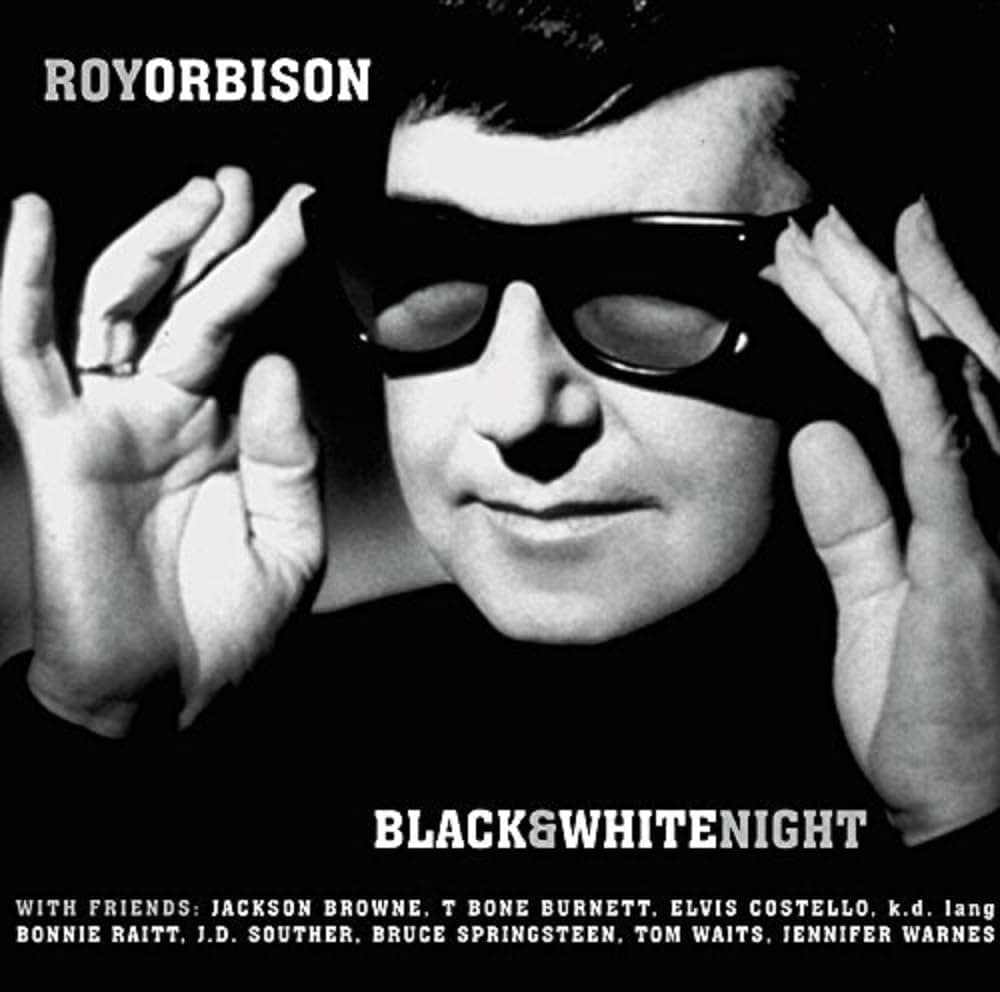
When Roy Orbison performed “The Comedians” during the legendary Black & White Night concert, later restored and expanded as Black & White Night 30, he was not revisiting one of his own chart hits. He was inhabiting a song written by Elvis Costello, and somehow transforming it into something that felt inseparable from his own mythology. The performance appeared as part of the celebrated 1987 Cocoanut Grove concert, officially reissued in expanded form in 2017 as Black & White Night 30, the archival release that restored previously unseen footage and alternate performances from Orbison’s remarkable late-career renaissance.
There is something deeply fitting about Orbison singing a Costello composition called “The Comedians.” By the late 1980s, Orbison had become more than a rock and roll pioneer. He had become a living symbol of endurance. The dark glasses, the operatic loneliness, the trembling emotional gravity in his voice all carried the weight of a man who had experienced extraordinary personal tragedy and professional resurrection. So when he stands beneath the stark black-and-white lighting and sings about performers masking heartbreak behind routines and appearances, the song acquires an almost autobiographical resonance.
Costello reportedly wrote the song specifically with Orbison’s voice in mind, understanding that few singers in popular music could communicate devastation with such restraint. The genius of the composition lies in its contradiction. The title suggests entertainment, laughter, performance. Yet the emotional atmosphere is nearly funereal. These are not comedians in the joyful sense. They are emotional actors, people continuing the performance long after love has collapsed behind the curtain.
Orbison understood this emotional duality better than almost anyone of his generation. He never sang heartbreak as weakness. He sang it as inevitability. That distinction matters. In “The Comedians,” every phrase feels suspended between dignity and collapse. His voice does not plead. It remembers. The famous Orbison vibrato arrives not as theatrical decoration, but as emotional fracture, a man holding composure together one note at a time.
The arrangement during Black & White Night is equally important to the song’s enduring power. Surrounded by an extraordinary ensemble that included Bruce Springsteen, Tom Waits, Bonnie Raitt, and Costello himself, Orbison remains the gravitational center of the room. The instrumentation is elegant but restrained, allowing silence and atmosphere to become part of the emotional architecture. Nothing feels rushed. Every pause matters.
What makes this performance so haunting decades later is the knowledge of timing. Orbison was in the midst of an extraordinary artistic comeback. Younger musicians revered him. Audiences rediscovered him. The world suddenly remembered the emotional sophistication he had brought to rock music long before vulnerability became fashionable. Yet there is still an unmistakable shadow hanging over the performance, as if Orbison instinctively understood how fragile revival can be.
That is why “The Comedians” survives not merely as a concert performance, but as a meditation on identity itself. It asks what remains when the performance ends, when applause fades, when people can no longer hide behind charm or routine. Few singers could approach those questions without sounding melodramatic. Orbison never needed melodrama. His voice carried truth naturally.
In the end, the performance feels less like a man singing a song and more like a man quietly confessing what life had taught him.