
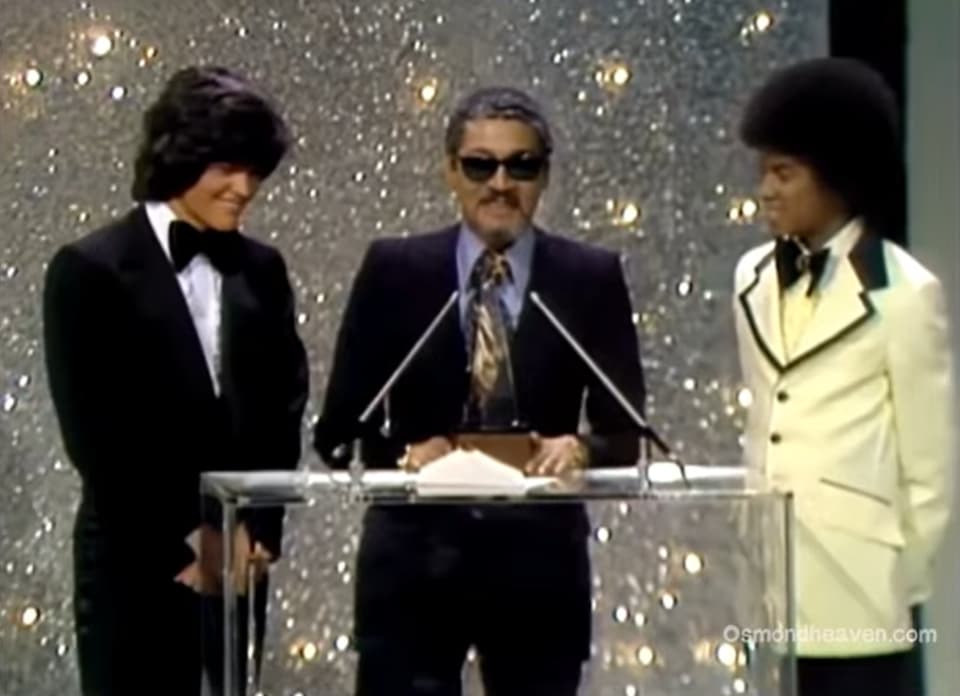
Two Teen Idols Stood Beneath the Brightest Lights in America, Carrying the Weight of Fame Before They Were Old Enough to Understand It
The February 19, 1974 debut of the American Music Awards was not a charting single nor part of a formal album release, yet the televised event became a defining cultural snapshot of 1970s pop celebrity. Hosted in part by Donny Osmond and Michael Jackson, two of the era’s most recognizable teenage stars, the inaugural ceremony arrived at a moment when both young performers were already carrying extraordinary commercial success on their shoulders. By early 1974, Michael Jackson had already scored solo hits like “Ben”, which reached No. 1 on the Billboard Hot 100 in 1972, while the Jackson 5 remained one of the most dominant crossover acts in popular music. Donny Osmond, meanwhile, was emerging from the astonishing success of The Osmonds and his own solo career, with songs such as “Go Away Little Girl” and “Puppy Love” having turned him into one of the defining teen idols of the decade.
What survives from that night is more than a piece of television history. It is a hauntingly innocent document of youth, fame, and the machinery of American entertainment during the early 1970s. Watching Donny Osmond and Michael Jackson together onstage today feels almost surreal—not because of spectacle, but because hindsight has transformed the footage into something far more emotional than anyone in that studio could have anticipated.
There is a peculiar tension visible in those broadcasts. Osmond radiates polished television confidence, the clean-cut charisma perfected through endless variety-show appearances. Jackson, by contrast, often appears quieter, more inward, carrying an intensity that seemed to flicker beneath every smile. They were presented to America as rivals in the glossy pages of teen magazines, yet history reveals something more complicated: two boys navigating the same impossible phenomenon from opposite sides of the cultural divide.
The 1974 American Music Awards itself represented a shift in the music industry. Created by Dick Clark as an alternative to the Grammys, the AMAs emphasized popularity and fan connection rather than institutional approval. That distinction mattered. Artists like Jackson and Osmond were not merely singers; they were mass emotional events. Their faces were everywhere—television screens, lunchboxes, magazines, bedroom posters. The ceremony captured the growing realization that pop music had become inseparable from image, youth culture, and televised identity.
Yet the deeper resonance of this appearance lies in what came afterward. Decades later, Donny Osmond would speak openly about his friendship with Michael Jackson, reflecting on the uncanny parallels between their lives—both were child stars from enormous musical families, both experienced suffocating public scrutiny, and both understood the loneliness hidden beneath applause. Jackson once reportedly told Osmond that he was “the only person on this planet” who truly understood his childhood. That statement alone changes the emotional gravity of the 1974 footage.
Viewed now, the broadcast no longer feels like a simple awards-show appearance. It feels like the beginning of two very different American stories unfolding side by side. One would become perhaps the most famous entertainer in modern history; the other would spend decades redefining himself beyond the label of teen idol. But in that single frozen moment beneath the television lights, both were simply young performers trying to survive the enormous expectations placed upon them.
That is why the 1974 American Music Awards remains unforgettable. Not because it showcased perfection, but because it captured vulnerability before the world learned how costly fame could become.