
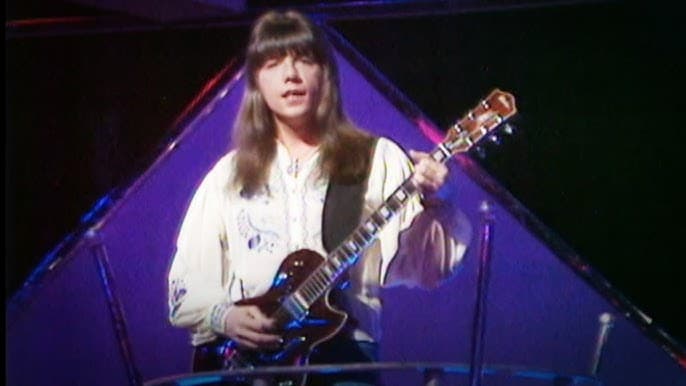
In the middle of glam rock’s glittering chaos, “Lady Starlight” whispered like a private confession beneath the stage lights.
Released during the towering commercial peak of Sweet, “Lady Starlight” emerged from the 1974 album Desolation Boulevard, a record that helped solidify the band’s evolution from hit-making glam provocateurs into something far more musically ambitious. The album itself reached notable chart success across Europe, climbing into the German Top 10, while Sweet continued their remarkable streak of international hits during the mid-1970s. Yet unlike the explosive swagger of “Ballroom Blitz” or the roaring adrenaline of “Fox on the Run,” this song arrived with a startling sense of vulnerability. Written and sung by Andy Scott, it even became his first solo single release — a rare and revealing detour inside the machinery of one of glam rock’s loudest bands.
What makes “Lady Starlight” endure is precisely that contrast. Sweet were masters of theatrical excess: platform boots, razor-sharp harmonies, pounding drums, and songs that sounded designed for flashing lights and packed arenas. But beneath all that spectacle lived musicians with a far deeper emotional vocabulary than critics of the era often acknowledged. “Lady Starlight” is evidence of that hidden interior world.
Andy Scott later recalled that producer Mike Chapman immediately insisted Scott himself should sing the track after hearing it performed acoustically in the studio. That decision changed the emotional temperature of the recording entirely. Rather than delivering polished glam-rock bravado, Scott’s voice carries a certain fragility — restrained, almost intimate. It sounds less like performance and more like memory.
Lyrically, the song drifts through longing, devotion, and emotional surrender. The “Lady Starlight” figure is never fully defined, and that ambiguity gives the song its haunting quality. She exists somewhere between lover, muse, fantasy, and emotional salvation. The lyrics are simple, but simplicity is often misunderstood in rock criticism. Here, repetition becomes hypnotic. The phrase “looking for starlight” feels less like a line in a chorus and more like the exhausted search for warmth in a world built on applause and illusion.
Musically, the arrangement avoids overwhelming the listener. Acoustic textures and melodic softness replace the aggressive stomp that defined much of Sweet’s catalog. The restraint is crucial. Every instrument leaves room for atmosphere, allowing the emotional ache to breathe naturally. In many ways, the song anticipates the softer, more reflective direction several hard rock bands would later explore in the late 1970s.
There is also something quietly symbolic about “Lady Starlight” appearing during glam rock’s golden years. By 1974, the genre was already beginning to reveal its emotional fatigue beneath the makeup and silver boots. Songs like this exposed the humanity underneath the costumes. That is why the track still resonates with devoted listeners decades later. It is not merely a ballad hidden inside a glam-rock catalog — it is the sound of a musician stepping briefly out of the spotlight to reveal the loneliness behind it.
For longtime admirers of Sweet, the song remains one of the band’s most revealing moments: delicate, sincere, and strangely timeless.