
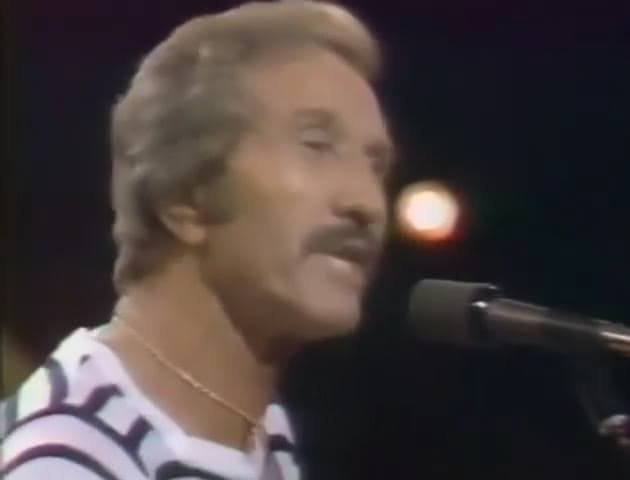
A Ballad of Justice and Myth, Where the West Became Eternal
Released in 1959 as part of Marty Robbins’ landmark album Gunfighter Ballads and Trail Songs, “Big Iron” did far more than merely climb the charts—it helped define the modern Western ballad. The single reached No. 5 on the Billboard Country chart and crossed into the pop world as well, peaking at No. 26 on the Billboard Hot 100, a remarkable achievement for a song so steeped in frontier imagery and narrative tradition. More than six decades later, the recording still rides through American musical memory like a lone horseman across desert dusk: patient, haunting, and impossibly vivid.
What makes “Big Iron” endure is not simply its story of an Arizona ranger confronting an outlaw named Texas Red. Countless cowboy songs had told tales of gunfighters before. What Robbins accomplished was something rarer—he transformed the archetype into poetry. The song unfolds with the calm authority of oral folklore, as though it had existed long before microphones and vinyl records ever captured it. Every verse advances with measured inevitability, each line carrying the dry wind of the Southwest through its cadence.
The genius of Marty Robbins was his refusal to rush the tale. The arrangement moves at a deliberate pace, guided by softly rolling percussion and restrained guitar work that evokes open plains rather than saloon theatrics. Robbins understood that suspense in Western mythology is born from silence as much as action. The listener waits alongside the townspeople, feeling the collective tension before the final confrontation arrives. Even the repeated phrase “big iron on his hip” becomes incantatory, transforming the ranger into something larger than flesh and blood—a symbol of order entering a lawless landscape.
Yet beneath the surface mythology lies something unexpectedly sophisticated. “Big Iron” is fundamentally about inevitability. Texas Red is introduced as a killer whose reputation precedes him, a man untouched by consequence. But Robbins frames the ranger not as a swaggering hero, but as a quiet corrective force. He speaks little. He boasts never. In many ways, the song rejects the loud masculinity often associated with cowboy fiction. The ranger’s strength is discipline. His danger lies in precision. When the climactic gunfight finally erupts, it is over almost before the listener realizes it has begun. Justice arrives swiftly, without spectacle.
That restraint is precisely why the ending lingers. Robbins leaves no moral speech, no celebration, no cinematic flourish. The ranger simply rides away. The legend survives because it refuses sentimentality. Like the greatest folk narratives, the song trusts the listener to feel the emptiness left behind after violence settles into memory.
Vocally, Marty Robbins delivers one of the defining performances of his career. His voice carries unusual warmth for a Western ballad—never harsh, never theatrical. There is elegance in the phrasing, almost a crooner’s sophistication hidden inside cowboy storytelling. That duality helped separate “Big Iron” from novelty Western records of its era. Robbins was not parodying the Old West; he was preserving its emotional mythology through song.
Over time, the track gained an even larger cultural afterlife. It became a favorite among generations fascinated by Americana, frontier storytelling, and the romantic loneliness of the Western hero. Decades after its release, younger audiences rediscovered it through film culture, radio revivals, and later through the gaming world, where its atmosphere proved timeless. But popularity alone does not explain its survival. Songs endure because they speak to something permanent in human imagination.
And “Big Iron” does exactly that. It reminds listeners of an era—real or imagined—where character was measured not by noise, but by nerve; where justice arrived quietly; where legends were carried not in headlines, but in songs passed from one voice to another beneath an endless desert sky.