
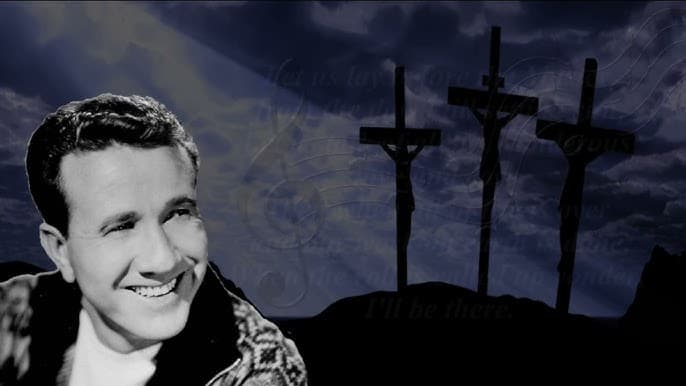
A quiet promise of reunion that lifts earthly sorrow into eternal hope
Released during Marty Robbins’ prolific years as a recording artist who moved effortlessly between country, western balladry, and sacred music, When The Roll Is Called Up Yonder appeared on the gospel album The Hymns of My Life, a record devoted to faith, memory, and spiritual reassurance. Unlike his chart-topping country singles, this recording did not enter the mainstream pop or country singles charts upon release. Its significance was never measured in radio rankings or commercial momentum. Instead, its power has always lived in a deeper place, one shaped by tradition, belief, and the enduring human need for consolation. Within the arc of Robbins’ career, the song stands as a reflective pause, a moment where ambition gives way to reverence.
Originally written in 1893 by James Milton Black, When The Roll Is Called Up Yonder carries more than a century of congregational history. By the time Robbins recorded it, the hymn had already become a cornerstone of American gospel tradition, sung at revivals, funerals, and quiet Sunday mornings across generations. Robbins does not attempt to modernize it or dramatize its message. Instead, he approaches it with restraint, allowing the hymn’s familiar promise to speak for itself. His voice is measured, steady, and unadorned, as if aware that excess would weaken the gravity of the words.
The song’s central theme is not death, but arrival. It does not dwell on fear or judgment, but on reunion and recognition. The image of the roll being called is administrative, almost humble, yet profoundly moving. It suggests that eternity is not chaos or abstraction, but order, remembrance, and belonging. Robbins understands this nuance. He sings not as a preacher, but as a believer among believers, someone standing in line with everyone else, waiting to hear a name spoken aloud.
Musically, the arrangement mirrors the lyric’s humility. There is no urgency in the tempo, no theatrical swell designed to provoke emotion. The power comes from repetition and familiarity. Each verse reinforces the same promise, and with each return, the message settles more deeply. Robbins’ delivery emphasizes clarity over ornamentation, ensuring that every word is understood, not merely felt. This approach reflects his broader artistry, where storytelling always took precedence over display.
Within Robbins’ catalog, When The Roll Is Called Up Yonder occupies a unique cultural role. It is not remembered as a hit, but as a testament. It reveals an artist who understood that legacy is not built solely on chart positions, but on moments of sincerity that listeners carry with them through life’s most difficult passages. In this recording, Robbins offers no spectacle, only reassurance. He reminds the listener that beyond loss, beyond time, beyond uncertainty, there is a gathering where no one is forgotten. For those who encounter the song today, its resonance remains unchanged. It is not a performance meant to impress, but a voice meant to accompany, quietly and faithfully, until the roll is finally called.