
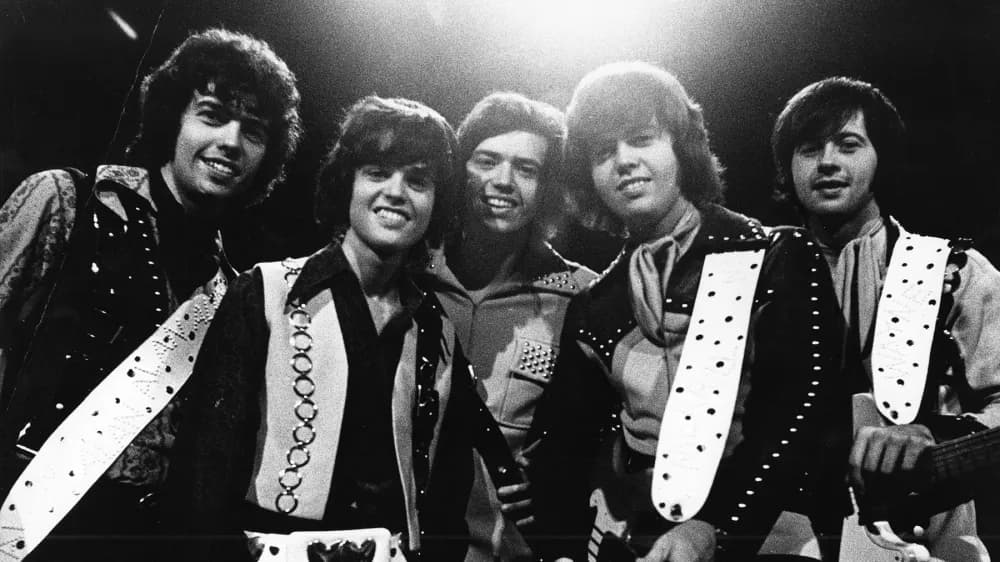
A river of innocence on the surface, a surge of youthful rebellion underneath.
When The Osmonds released “Down by the Lazy River” in January 1972, the song became one of the defining records of the group’s remarkable transition from teen-pop sensations into a more ambitious rock-oriented act. Featured on the album Phase III, the single climbed to No. 4 on the U.S. Billboard Hot 100, reached No. 1 in Canada and the Netherlands, and became one of the band’s biggest international successes. Written by Alan and Merrill Osmond, it arrived at a moment when the brothers were eager to prove they were far more than a manufactured family act.
Listening to “Down by the Lazy River” today, what remains striking is the contrast between its title and its energy. The phrase itself evokes a peaceful American landscape—a quiet stream, summer sunlight, and carefree youth. Yet the record explodes from the speakers with pounding drums, urgent vocals, and a driving rock arrangement that feels anything but lazy. That tension is part of its enduring fascination. Beneath the idyllic imagery lies a restless spirit, the sound of young musicians pushing against expectations.
The song emerged during a pivotal chapter in the Osmonds’ career. While many listeners associated the family with polished television appearances and clean-cut pop hits, Phase III revealed a band increasingly interested in writing its own material and exploring a harder-edged sound. The aggressive rhythm, layered harmonies, and near-frenetic momentum of “Down by the Lazy River” signaled that transformation. It was not merely another hit single; it was a declaration of artistic independence.
Lyrically, the song captures a recurring theme in early-1970s pop and rock: the search for escape. The river becomes more than a physical location. It represents freedom from pressure, judgment, and responsibility. Like many great youth anthems, it invites listeners toward a place that may not even exist in reality—a symbolic refuge where life feels simpler and time moves more slowly. The destination matters less than the longing itself.
What gives the record its emotional depth is the way that longing is paired with urgency. Most songs about relaxation drift gently; “Down by the Lazy River” races forward. The arrangement creates the sensation of someone running toward a dream before it disappears. In that sense, the song reflects a universal experience: the realization that innocence is fleeting, and that the places we remember most fondly often become more powerful in memory than they ever were in life.
The 1972 live performances amplified that feeling even further. On stage, the song became a showcase for the Osmonds’ musicianship and raw energy, challenging the stereotypes that often surrounded the group. Decades later, many listeners revisiting these performances are surprised by how forcefully the band embraced rock dynamics and instrumental intensity.
More than fifty years after its release, “Down by the Lazy River” endures because it captures a timeless contradiction. It is a song about peace delivered with explosive energy, a celebration of simplicity performed with remarkable ambition. In the grooves of this early-1970s classic, one hears not just a hit record, but a band determined to redefine itself—and a generation chasing a place where youth, freedom, and possibility might last forever.