
A Love Affair Does Not End with a Goodbye—It Ends in the Silence That Follows
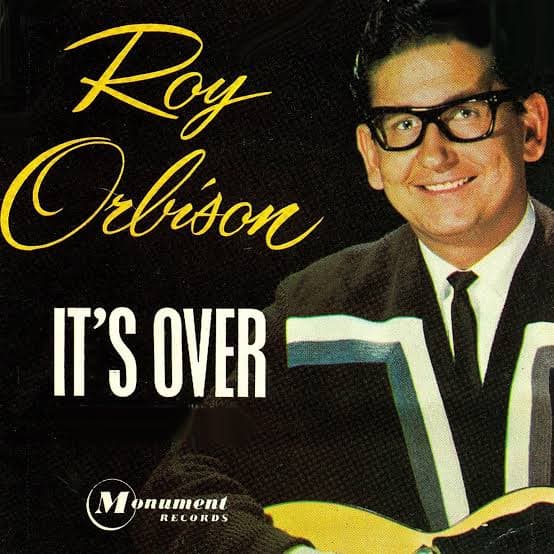
When Roy Orbison released “It’s Over” in April 1964, he was already one of the most distinctive voices in popular music, yet this recording elevated his artistry to an even more dramatic height. Written by Roy Orbison and Bill Dees, the song became a major international success, reaching No. 1 on the UK Singles Chart and climbing to No. 9 on the Billboard Hot 100 in the United States. It was later included on More of Roy Orbison’s Greatest Hits, a collection that captured one of the most remarkable creative peaks of Orbison’s career.
What makes “It’s Over” extraordinary is that it refuses to treat heartbreak as a sudden event. Most breakup songs describe the moment love dies; Orbison instead explores the painful realization that it has already died long before the final words are spoken. The title itself arrives not as a dramatic declaration but as a devastating acceptance. The relationship is gone, and the narrator stands helplessly amid the emotional wreckage, trying to comprehend how something once beautiful could dissolve so completely.
Musically, the song represents one of the finest examples of Orbison’s celebrated operatic style. The arrangement begins with restraint, almost as if the narrator is struggling to maintain composure. Then the orchestration gradually expands, layer upon layer, building toward the kind of emotional crescendo that became Orbison’s trademark. Strings swell, rhythms intensify, and his voice rises with astonishing control. By the climax, the performance feels less like a pop recording and more like a tragic stage drama compressed into less than three minutes.
That sense of grandeur was central to Orbison’s appeal during the early 1960s. While many artists of the era projected confidence, rebellion, or youthful excitement, Orbison specialized in vulnerability. He sang not as the victorious lover but as the wounded observer. In “It’s Over,” he transforms heartbreak into something almost cinematic. The listener can feel the loneliness in every pause and hear the resignation behind every soaring note.
The 1965 Monument Concert performance adds another dimension to the song’s legacy. On stage, Orbison’s voice carried an intensity that recordings could only partially capture. Dressed in black, standing nearly motionless behind his guitar, he commanded attention through sheer vocal power. There were no elaborate stage moves, no theatrical gestures. The drama existed entirely within the music itself. Each rising phrase felt earned, each emotional peak authentic.
More than sixty years later, “It’s Over” remains one of the defining recordings in Roy Orbison’s catalog. It stands alongside his greatest works not because it offers comfort, but because it speaks honestly about loss. The song understands a truth that listeners of every generation eventually encounter: sometimes the hardest part of love is not the goodbye itself, but recognizing that the goodbye has already happened in the heart long before anyone says the words.