
A Song Discovered After Silence, Yet Filled With a Lifetime of Love
When Roy Orbison‘s “The Way Is Love” finally emerged in 2014, it arrived not as a contemporary hit chasing chart positions, but as a remarkable message from the past. Released as part of the 25th-anniversary deluxe edition of Mystery Girl, the album that had originally become Orbison’s triumphant final statement, the song carried extraordinary significance. Unlike the chart-topping success of “You Got It”, “The Way Is Love” was unveiled decades after Orbison’s death, restored from a home-recorded demo and completed by his sons, transforming it into one of the most poignant posthumous releases in modern music history.
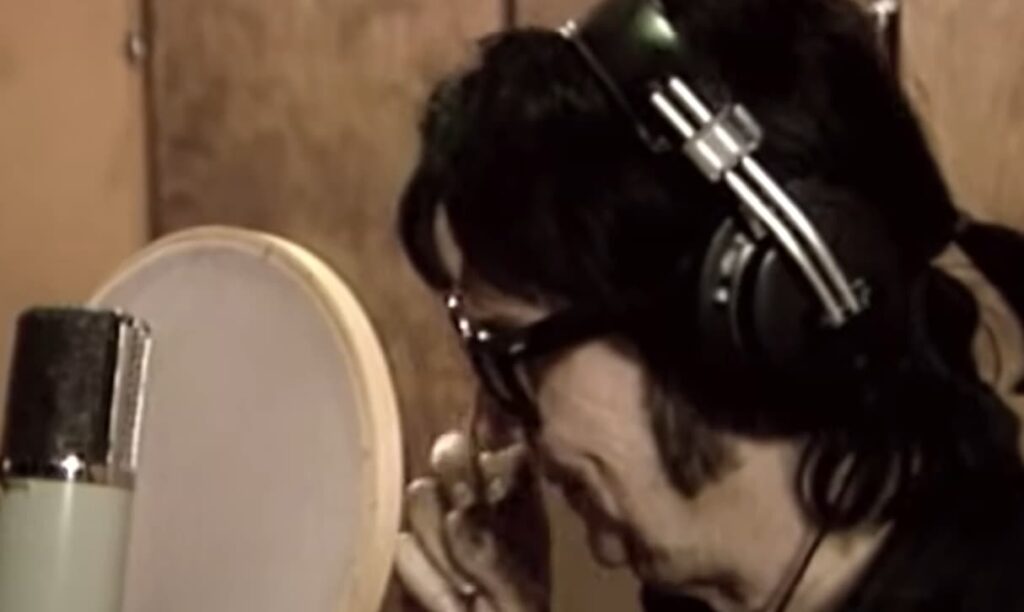
For listeners familiar with Orbison’s career, the song feels less like an unreleased outtake and more like a final chapter discovered between the pages of a beloved novel. According to accounts from the Orbison family, “The Way Is Love” was among the last songs Roy wrote, created with his longtime collaborator Bill Dees, the same songwriting partner who helped shape classics such as “Oh, Pretty Woman.” The demo was recorded on a simple cassette machine and then misplaced for years before being rediscovered and lovingly restored. Orbison’s sons added new instrumentation while preserving their father’s original vocal performance, allowing the song to bridge two generations of a musical family.
What makes the recording so moving is not merely its history but its emotional perspective. Throughout his career, Orbison often sang from the shadows of heartbreak. His greatest masterpieces—“Crying,” “Only the Lonely,” and “In Dreams”—were built upon longing, loss, and emotional vulnerability. “The Way Is Love” offers something subtly different. It carries the wisdom of a man who had spent decades exploring sorrow and had arrived at a quieter understanding of life.
The song unfolds with remarkable simplicity. There is no dramatic orchestral crescendo designed to overwhelm the listener. Instead, the melody moves with gentle confidence, allowing Orbison’s unmistakable voice to remain at the center. Even through the imperfections of a decades-old demo recording, the emotional truth shines through. His voice sounds intimate, almost conversational, as if he is sharing a personal revelation rather than performing for an audience.
Lyrically, the song reflects a philosophy that feels increasingly rare in popular music. Love is not portrayed as obsession, possession, or tragedy. It is presented as a guiding force—a path rather than a destination. The title itself functions almost like a statement of faith. For Orbison, whose life was marked by extraordinary personal triumphs and devastating losses, that idea carries considerable weight. The words resonate because they seem earned.
There is also a profound symbolism in the way the song reached the public. A forgotten cassette, a voice preserved across decades, sons completing a father’s unfinished work—these elements create a narrative that mirrors the song’s central message. Love survives absence. Love survives time. Love survives loss.
As a result, “The Way Is Love” stands as more than a posthumous release. It feels like a final conversation with Roy Orbison himself—an artist whose voice once defined loneliness, yet whose last rediscovered message embraced something far more enduring: the belief that, despite everything life may take away, love remains the path forward.