
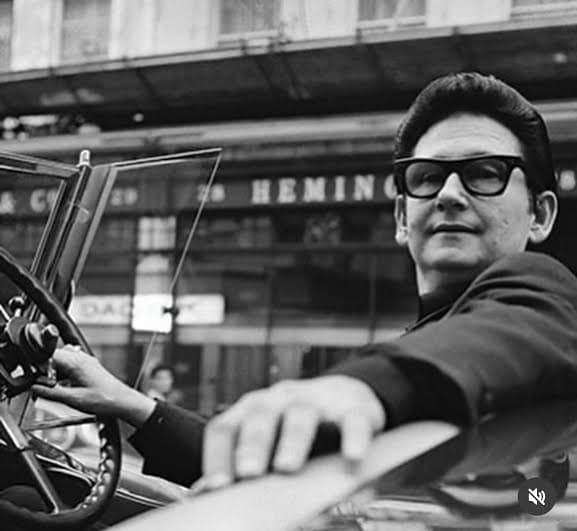
A Restless Heart Crossing Every Distance for Love
Released in 1956 as the debut Je-Wel Records single by Roy Orbison and The Teen Kings, “Trying to Get to You” arrived paired with the soon-to-be-classic “Ooby Dooby” on the B-side. While the recording did not register as a major national chart hit upon its original release, it occupies a pivotal place in Orbison’s early career, capturing the young Texan at the threshold of greatness. Long before the operatic heartbreak of “Only the Lonely”, the dreamlike anguish of “In Dreams”, or the worldwide triumph of “Oh, Pretty Woman,” this recording revealed the emotional intensity that would become his signature. It later found renewed life through Sun-era compilations and retrospective collections, standing as one of the most revealing documents of Orbison’s formative years.
What makes “Trying to Get to You” so fascinating is that it already contains many of the emotional instincts that would define Orbison’s artistry. Written by Rose Marie McCoy and Charles Singleton and first recorded by the vocal group the Eagles, the song tells a deceptively simple story: a lover driven by an irresistible force, compelled to cross any obstacle in pursuit of the one person who matters. Orbison approaches that premise not as a rockabilly singer delivering a dance number, but as a dramatist inhabiting a moment of emotional desperation.
Listening today, one can hear a young artist wrestling with the boundaries of 1950s rock and roll. The performance moves with the urgency of the era’s rhythm-and-blues influences, yet Orbison’s voice reaches beyond mere excitement. There is already a yearning quality in his phrasing, a sense that the singer is not simply describing devotion but experiencing it in real time. The repeated declaration that he is “trying to get” to the object of his affection becomes more than a statement of intent; it becomes an obsession, a mission, almost a spiritual calling.
This emotional intensity would later become one of Orbison’s defining gifts. Unlike many rock-and-roll performers of the mid-1950s, who projected confidence, swagger, or youthful rebellion, Orbison specialized in vulnerability. Even in these early recordings, he seemed drawn toward characters caught between hope and heartbreak. “Trying to Get to You” offers an early glimpse of that sensibility. The narrator is determined, but beneath the determination lies anxiety—the fear that love may remain just out of reach.
Musically, the recording sits at a crossroads between rhythm and blues, country influences, and the emerging rockabilly sound that was reshaping American popular music. The arrangement is lean and energetic, driven by the restless momentum of a young band eager to make its mark. Yet Orbison’s voice remains the focal point, rising above the instrumentation with a conviction that hints at the extraordinary vocal power he would later unleash on Monument Records.
The lasting legacy of “Trying to Get to You” lies not in chart statistics or commercial triumphs but in what it reveals about an artist still discovering his identity. It is the sound of Roy Orbison before the dark glasses became iconic, before the heartbreak ballads conquered radio, and before the world knew him as “The Big O.” In just a few minutes, the song captures the essence of a young musician reaching toward something larger than himself—a theme that, fittingly, mirrors the song’s own message of relentless pursuit. More than six decades later, that sense of longing remains as powerful as ever, echoing across time with the timeless conviction that love is worth every mile traveled.