
A Chance Encounter Turned Into One of Rock and Roll’s Most Enduring Celebrations of Desire
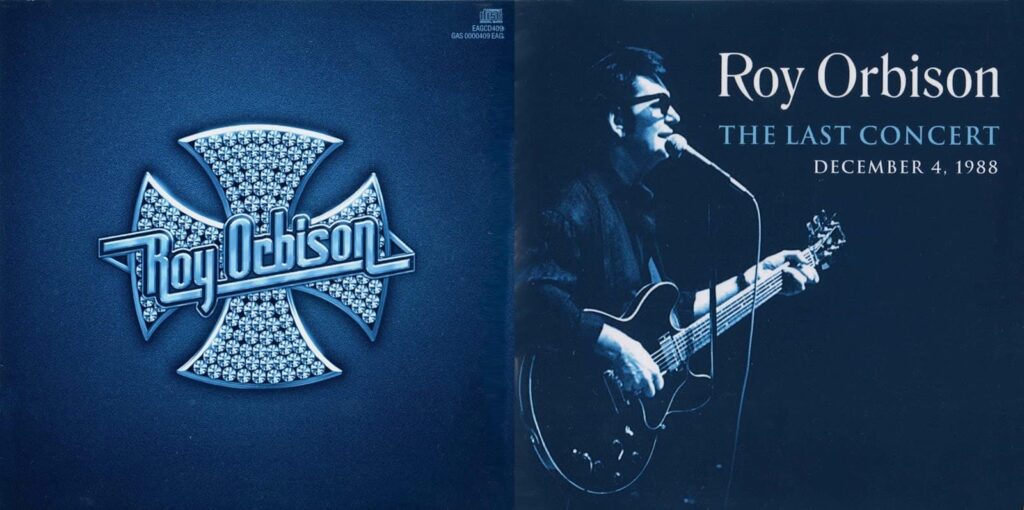
When Roy Orbison stepped onto the stage for A Black and White Night—often referred to by fans as his final major concert appearance in 1988—few performances carried more anticipation than “Oh, Pretty Woman.” Originally released in 1964, the song became one of Orbison’s defining achievements, spending three weeks at No. 1 on both the U.S. Billboard Hot 100 and the UK Singles Chart. It later appeared on the album Oh, Pretty Woman, cementing its place as the signature anthem of an artist whose voice could move effortlessly between vulnerability and grandeur.
Yet the enduring power of “Oh, Pretty Woman” lies in a fascinating contradiction. On the surface, it is one of the most straightforward songs ever written—a man notices a beautiful woman walking down the street and cannot take his eyes off her. But beneath that simple premise lives a remarkable blend of confidence, longing, fantasy, and uncertainty. Orbison was a master of emotional complexity, and even in a song driven by excitement and attraction, he found room for doubt.
The song’s creation has become part of rock-and-roll folklore. Written by Roy Orbison and Bill Dees, it reportedly emerged from a casual conversation that inspired the unforgettable phrase “pretty woman.” What followed was an explosion of creativity that produced one of the most recognizable songs of the twentieth century.
Musically, “Oh, Pretty Woman” announced itself with authority. That instantly recognizable guitar riff is more than an introduction—it is a declaration. Before Orbison even begins singing, listeners are drawn into a world of movement and possibility. Unlike many of his earlier hits, which often explored heartbreak and emotional devastation, this song radiates energy and optimism. Yet Orbison’s voice prevents it from becoming merely a cheerful rock-and-roll number. His delivery carries a subtle sense of yearning, as though the woman he admires is both real and unattainable.
The lyrics themselves unfold almost like a miniature film. A passing stranger becomes the center of an imagined story. Orbison moves from admiration to disbelief, then to disappointment when it seems she may continue walking away. The emotional twist arrives in the closing moments, when the woman turns around and acknowledges him. In less than three minutes, the song journeys from desire to uncertainty and finally to hope—a storytelling technique that few pop songs execute with such elegance.
Hearing “Oh, Pretty Woman” during Roy Orbison’s celebrated 1988 concert adds another layer of meaning. By then, Orbison was no longer simply a hitmaker from the 1960s. He had become a living monument to an era of popular music that prized melody, craftsmanship, and emotional honesty. Surrounded by an extraordinary ensemble of musicians and performing with the authority of a seasoned artist, he transformed the song from a youthful rock-and-roll smash into a statement of legacy.
More than sixty years after its release, “Oh, Pretty Woman” remains a rare achievement: a song instantly recognizable from its first note, universally accessible in its theme, and sophisticated enough to reward repeated listening. It captures a fleeting moment of attraction, but through Roy Orbison’s singular voice, that fleeting moment becomes timeless. The performance from The Last Concert 1988 stands as a reminder that great songs do not merely survive generations—they grow richer with them.