
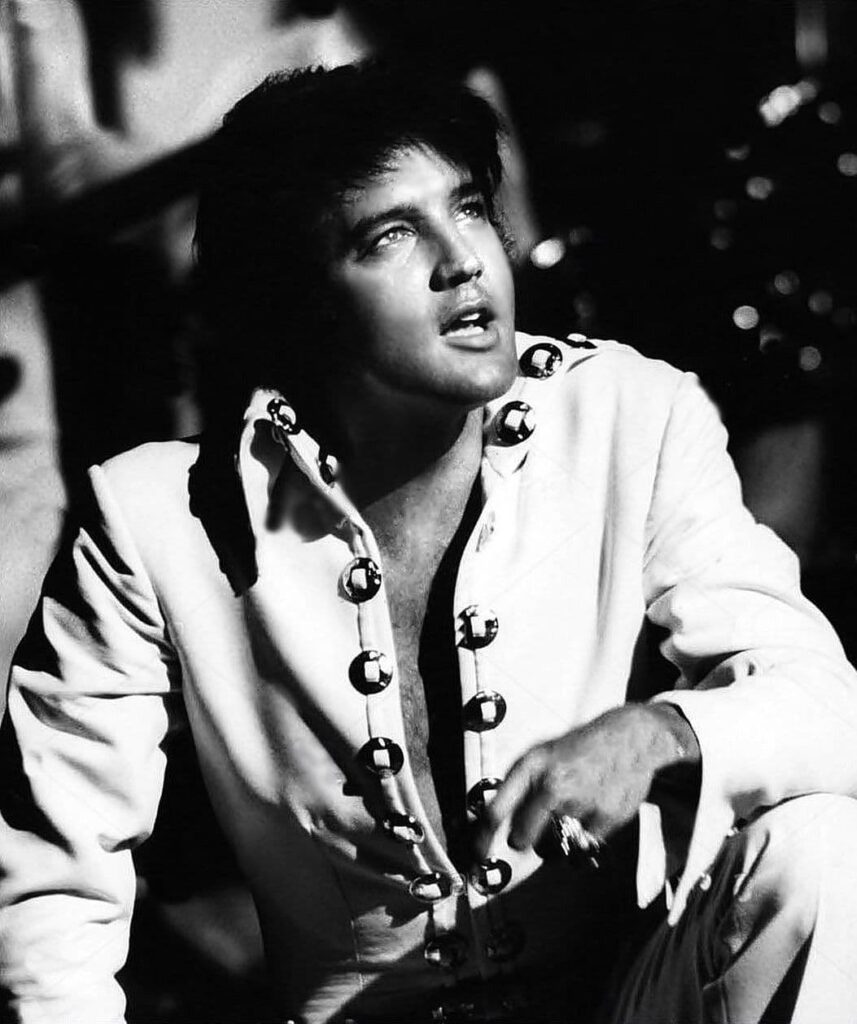
A Heartfelt Confession Arriving Too Late Can Echo Forever
When Elvis Presley released “Always On My Mind” in 1972, the recording quickly distinguished itself as one of the most emotionally resonant performances of his later career. Issued alongside “Separate Ways” as a double-sided hit and later included on the compilation Separate Ways, the song reached No. 16 on Billboard’s Hot Country Singles chart and climbed into the UK Top 10, affirming that Presley’s ability to connect with listeners remained as powerful as ever. Far more than a chart success, however, “Always On My Mind” became one of the defining statements of vulnerability in the Elvis catalog—a song whose quiet regret has only deepened with time.
What makes the recording so enduring is the remarkable tension at its center. The narrator is not pleading for a lost love to return, nor is he defending his past mistakes. Instead, he offers something rarer: an admission that love alone was not enough. The song’s most devastating realization arrives through its recognition that affection can exist without adequate expression. The words acknowledge a painful truth familiar to many adults—that devotion often goes unspoken until absence forces it into the open.
For Presley, the song arrived during a period of profound personal transition. Recorded in 1972, as his marriage to Priscilla Presley was unraveling, “Always On My Mind” inevitably carried emotional associations that listeners found impossible to ignore. Yet the greatness of the performance lies in the fact that it never feels like autobiography alone. Elvis inhabits the lyric so completely that it becomes universal. Every listener who has neglected a relationship, missed an opportunity to say “I love you,” or recognized too late the value of someone dear can hear themselves within its lines.
Musically, the recording exemplifies the mature elegance of Presley’s seventies work. Gone is the swaggering rock-and-roll rebel of the 1950s. In his place stands a vocalist capable of extraordinary restraint. The arrangement unfolds gently, allowing space for reflection rather than drama. Strings drift through the background like distant memories, while Elvis delivers each phrase with measured sincerity. He does not oversing the song; he confesses it. That distinction is crucial. The power comes not from vocal acrobatics but from the emotional weight carried within every pause and inflection.
Over the decades, many artists have recorded “Always On My Mind,” most notably Willie Nelson and the Pet Shop Boys, each uncovering different dimensions within the composition. Yet Presley’s version remains uniquely affecting because it sounds less like a performance than a reckoning. It captures the moment when pride gives way to honesty and when love is expressed not through grand gestures but through the painful acknowledgment of what should have been said all along.
More than fifty years after its release, “Always On My Mind” endures as one of the most poignant recordings in the Elvis Presley canon. It reminds us that regret is often love looking backward—and that some of the most powerful songs ever recorded are not about losing someone, but about finally understanding what they meant.