
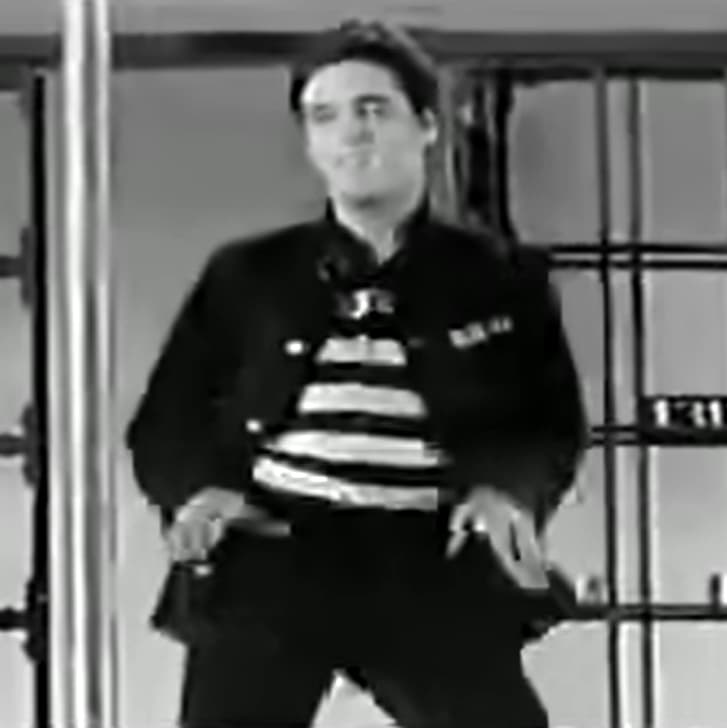
A prison wall becomes a stage where rebellion, desire, and freedom dance in rhythm.
Released in 1957, “Jailhouse Rock” by Elvis Presley arrived like a thunderclap in the middle of rock and roll’s first great revolution. Featured on the soundtrack EP Jailhouse Rock, created for the film of the same name, the single quickly ascended to No. 1 on the American charts and became one of Presley’s most enduring triumphs. More than a hit record, it was a cultural event—a song that captured the restless energy of youth and cemented Elvis Presley as the undisputed king of a new musical language that was thrilling, dangerous, and impossible to ignore.
Few recordings from the 1950s explode from the speakers with the same sense of immediacy. The opening guitar figure, sharp and insistent, feels like the clanging of a cell door thrown open. Then comes Elvis, not as a solemn storyteller but as a master of ceremony, inviting listeners into an unlikely celebration behind bars. Written by the legendary songwriting team of Jerry Leiber and Mike Stoller, “Jailhouse Rock” turns incarceration into a carnival of rhythm and movement. Its prisoners are not defeated men; they are dancers, dreamers, and characters bursting with personality.
The song’s brilliance lies in its playful contradiction. A jail is a place of confinement, yet everything about “Jailhouse Rock” radiates freedom. The inmates dance, sing, and swing with abandon, transforming punishment into liberation through music. That inversion spoke directly to the spirit of the rock-and-roll generation. In the conservative climate of the 1950s, rock itself was often treated as something unruly and disruptive. By placing its ecstatic celebration inside a prison, the song subtly suggests that youthful energy cannot be contained by walls, rules, or social expectations.
Its legacy was magnified by the film sequence that accompanied it. The choreographed performance of “Jailhouse Rock” remains one of the defining images of twentieth-century popular music: Elvis Presley, dressed in black and moving with effortless confidence, leading a group of inmates through a dance routine that would influence generations of performers. It was one of the earliest moments when a rock song became inseparable from its visual presentation, foreshadowing the music-video era by decades.
Nearly seventy years after its release, “Jailhouse Rock” still feels alive because it embodies the essence of early rock and roll: humor, sensuality, rebellion, and irresistible rhythm. It is not merely a song about prisoners passing the time. It is an anthem about the human impulse to create joy in confinement and to find movement even when the world insists on stillness. In those electrifying two-and-a-half minutes, Elvis Presley turned a jail cell into a dance floor and gave rock and roll one of its immortal celebrations of freedom.