
A Father’s Quiet Sacrifice Becomes the Measure of a Life Well Lived
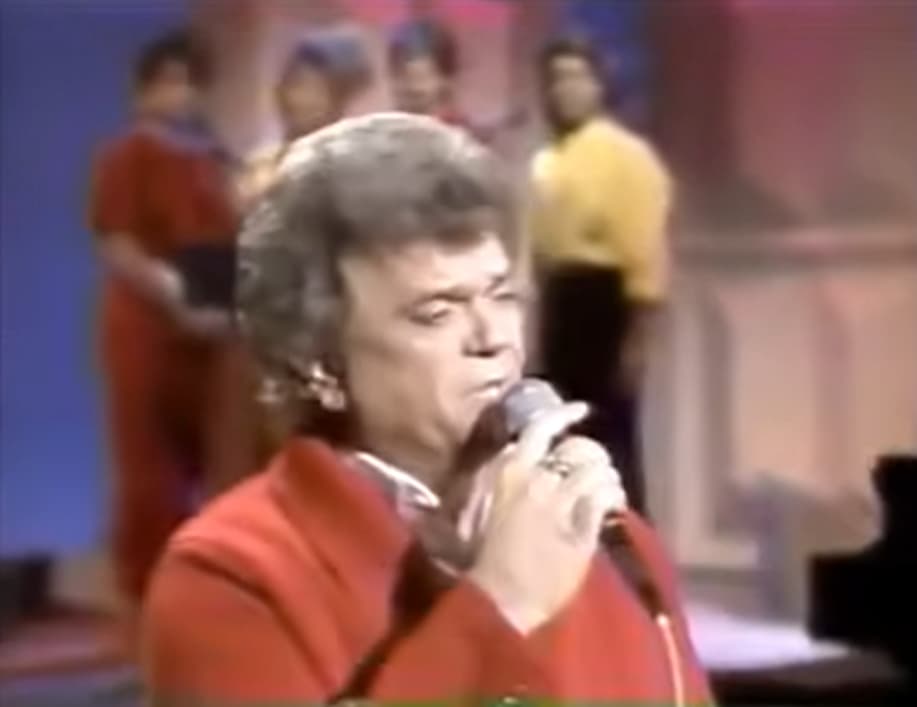
When Conway Twitty released “That’s My Job” in late 1987, the song quickly climbed to the summit of the Billboard Hot Country Singles chart, becoming another No. 1 entry in a career already overflowing with them. Drawn from the album Borderline, the record arrived during a period when Twitty had long since mastered the art of emotional storytelling. Yet even among his many classics of love and heartbreak, “That’s My Job” occupied a different, almost sacred place. It was not a song of romance or regret, but a deeply human meditation on fatherhood, responsibility, and the quiet heroism that often goes unnoticed until memory grants it the dignity it deserves.
There is a remarkable simplicity to the song’s narrative. A son recalls moments from his childhood and adulthood—times of fear, disappointment, and uncertainty—only to find his father standing as a constant source of reassurance. The refrain, “That’s my job, that’s what I do,” is delivered with an understated humility that makes its emotional force all the more devastating. The father never presents himself as extraordinary. He simply accepts the burden of protecting and guiding his child because, in his eyes, that is the very definition of being a parent.
What gives the song its enduring power is its understanding that love is often expressed through duty rather than grand declarations. The father’s affection is woven into everyday acts of support and sacrifice. Country music has long celebrated family and working-class devotion, but “That’s My Job” distills those themes into something universal. It speaks to anyone who has ever looked back on their life and realized that the strongest foundations were built by hands that rarely sought recognition.
Musically, the arrangement is restrained, allowing Twitty’s warm and weathered voice to carry the emotional weight. He sings not as a performer reaching for sentimentality, but as a man who understands the gravity of the words he is delivering. Every phrase seems to emerge from lived experience, lending the song an authenticity that cannot be manufactured.
Over the years, “That’s My Job” has become one of those rare recordings that transcend their era. It is played at family gatherings, memorial services, and quiet moments of remembrance because it articulates something many people struggle to say aloud: that the people who shape our lives most profoundly often do so through ordinary acts of steadfast love. In the vast catalogue of Conway Twitty, this song endures as one of his most tender achievements—a tribute not merely to fathers, but to the silent promises that hold families together across generations.