
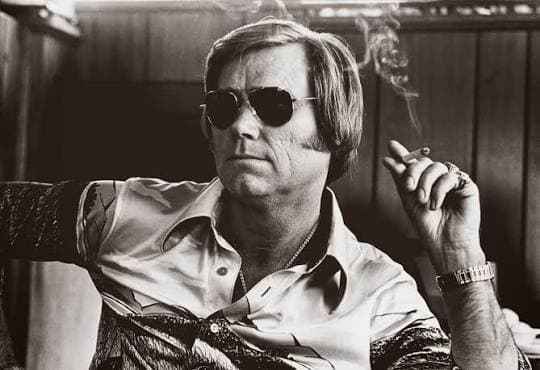
A Song of Solace and Surrender, Where Love Burns with the Warmth of Fine Whiskey
When George Jones released “Tennessee Whiskey” in 1983, the song quickly became one of the defining recordings of his later career, climbing to No. 2 on the Billboard Hot Country Singles chart and serving as a centerpiece of his album Shine On. Though the song would eventually find renewed life decades later through other interpretations, it was Jones’s weathered, deeply human performance that first etched it into the canon of country music. In his hands, “Tennessee Whiskey” became more than a love song—it became an ode to redemption, a quiet confession from a man who knew intimately the dangerous pull of the bottle and the saving grace of affection.
The origins of the song are themselves rooted in the rich collaborative tradition of Nashville songwriting. Penned by Dean Dillon and Linda Hargrove, with additional contributions from Bobby Braddock, the composition was initially intended for another voice. Yet it found its truest vessel in Jones, whose personal history lent every lyric an almost autobiographical weight. By the early 1980s, Jones had already become one of country music’s most legendary and troubled figures, a singer whose battles with alcohol and personal demons were nearly as famous as his extraordinary voice.
That history casts a long, poignant shadow over the song’s central metaphor. The narrator compares a lover’s devotion to whiskey—not the destructive, reckless spirit often associated with country music’s drinking songs, but something rare and restorative. “You’re as smooth as Tennessee whiskey” is not merely a compliment; it is an expression of profound relief, the gratitude of someone who has wandered through loneliness and finally found sanctuary.
Musically, the recording unfolds with remarkable restraint. The arrangement moves at an unhurried pace, allowing Jones’s phrasing to carry the emotional burden. His voice, already marked by decades of triumph and hardship, bends around each line with exquisite tenderness. There is no theatrical heartbreak here, no grand display of anguish. Instead, the performance glows with the quiet wisdom of a man who understands that love’s greatest gift is not ecstasy but comfort.
The enduring appeal of “Tennessee Whiskey” lies in this emotional honesty. It speaks to those moments in life when redemption arrives unexpectedly, when another person becomes a refuge from one’s own restless nature. The song’s imagery is simple, almost conversational, yet its emotional resonance is immense because it understands a universal truth: sometimes salvation comes not through dramatic transformation, but through the steady warmth of another’s presence.
In the long and storied catalog of George Jones, a singer revered for his ability to inhabit every word he sang, “Tennessee Whiskey” remains one of his gentlest and most affecting performances. It is a song that ages like its namesake—growing richer, deeper, and more comforting with time, a reminder that even the most troubled souls can still find grace in love.