
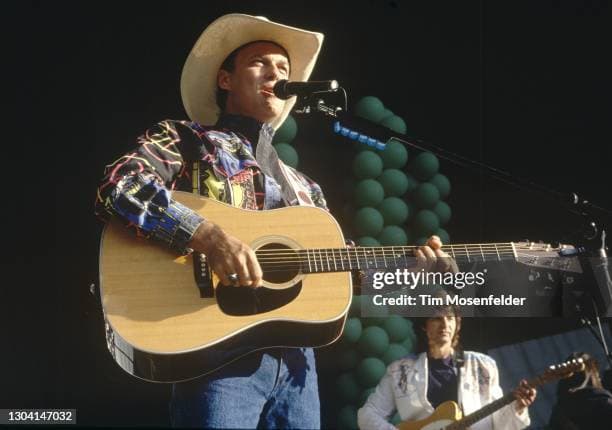
A Lonely Heart Confesses What Daylight Tries to Hide
By the time Ricky Van Shelton released “Sometimes I Cry In My Sleep” in 1988, he had become one of country music’s most dependable new traditionalists, a singer whose deep, resonant baritone seemed born to carry songs of heartache. Issued as a single from his sophomore album, Loving Proof, the song climbed into the Top 10 of the Billboard Hot Country Singles chart, further cementing Shelton’s remarkable streak of hits during the late 1980s. It was another triumph for an artist who understood that country music’s greatest power often lies not in grand gestures, but in quiet confessions.
There is a particular kind of loneliness that only reveals itself in the stillness of the night, when pride is asleep and memory is wide awake. “Sometimes I Cry In My Sleep” lives entirely within that fragile territory. The song is not about dramatic heartbreak or bitter recrimination. Instead, it explores something far more intimate: the involuntary persistence of love after a relationship has ended.
The title itself is devastating in its simplicity. To cry while awake is one thing; tears shed in sleep suggest emotions so deeply rooted that they have slipped beneath consciousness. The narrator can maintain his composure during the day, perhaps even convince himself that he has moved on. Yet in dreams, where the heart cannot disguise its wounds, grief resurfaces with undeniable force. This is classic country songwriting—ordinary words arranged to reveal extraordinary emotional truths.
Musically, the recording is a masterclass in restraint. Shelton’s vocal performance never begs for sympathy. He sings with a measured sadness, allowing every phrase to breathe. The production, characteristic of Nashville’s late-1980s traditional revival, surrounds him with gentle steel guitar and understated accompaniment, creating a landscape where silence and longing seem equally important. The arrangement never overshadows the lyric; instead, it serves as a soft frame for the emotional portrait at the song’s center.
The late 1980s marked a period when country music was rediscovering its traditional roots after years of pop experimentation. Alongside artists like Randy Travis and George Strait, Ricky Van Shelton emerged as one of the voices bringing emotional directness back to the forefront. “Sometimes I Cry In My Sleep” exemplifies that movement. It is unadorned, sincere, and profoundly human.
Its enduring appeal lies in its recognition of a universal experience: the realization that some loves do not leave us neatly or completely. They linger in dreams, return in unexpected moments, and reveal themselves in the quiet hours when we are least prepared to face them. The song reminds us that heartbreak is not always loud. Sometimes it arrives as a tear shed in darkness, witnessed by no one, yet carrying the full weight of a remembered love.
Nearly four decades after its release, “Sometimes I Cry In My Sleep” remains one of those understated country gems that speaks softly but leaves an indelible mark, a midnight confession preserved forever in vinyl grooves and memory alike.