
A Journey Home Where Memory, Regret, and Redemption Meet on the Quiet Backroads of the Heart
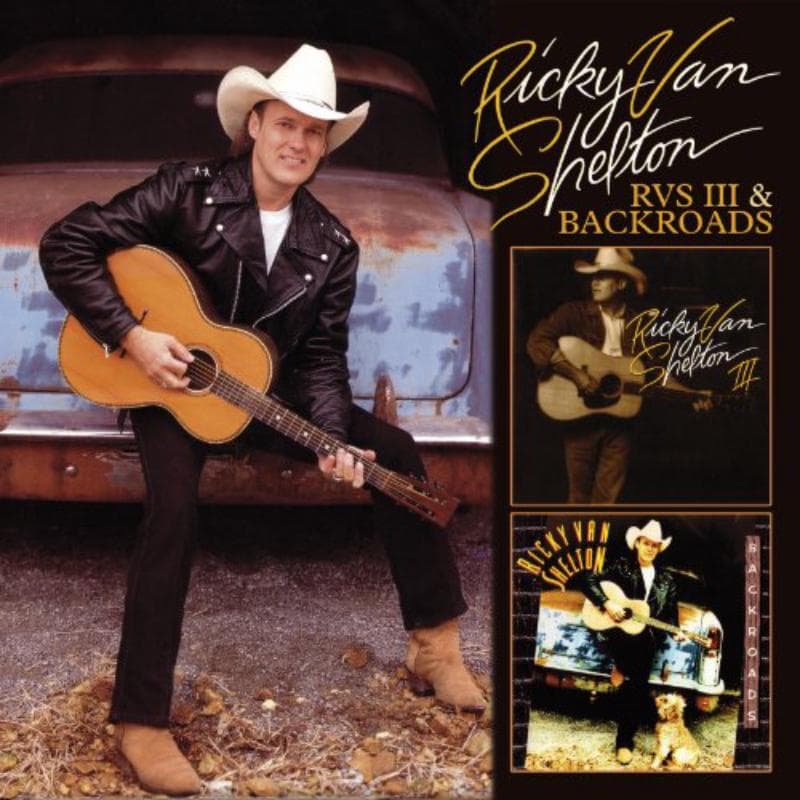
When Ricky Van Shelton released “Backroads” in 1991 as the title track and lead single from the album Backroads, the song quickly became another defining success in one of country music’s most remarkable commercial runs. It climbed to No. 2 on the Billboard Hot Country Singles & Tracks chart, reinforcing Shelton’s standing as one of the premier traditional country vocalists of the era. Drawn from the acclaimed Backroads album, the recording arrived during a period when country music was increasingly embracing polished production, yet Shelton remained deeply rooted in the timeless storytelling traditions that had always defined the genre. That balance—between contemporary accessibility and classic country sincerity—is precisely what gives “Backroads” its enduring emotional power.
What makes “Backroads” resonate decades after its release is that its title speaks to far more than a network of rural roads. The “backroads” become a metaphor for the hidden paths people travel when searching for forgiveness, reflection, and the pieces of themselves left behind. Rather than celebrating escape for its own sake, the song explores the instinctive desire to leave the crowded highways of modern life and return to places where memories remain untouched by time. It is a journey inward as much as outward.
Country music has long found poetry in geography. Dirt roads, old farmhouses, forgotten bridges, and small-town landmarks often serve as emotional landmarks rather than mere scenery. “Backroads” follows that tradition beautifully. Every mile traveled becomes an encounter with the past—a reminder that places remember us even when people move on. Shelton’s performance understands this delicate relationship between landscape and memory. His voice never rushes the story, allowing each phrase to unfold with the measured confidence of someone who has lived enough life to know that reflection cannot be hurried.
Vocally, Ricky Van Shelton possessed one of the purest baritone voices of the late 1980s and early 1990s. Unlike singers who relied on dramatic flourishes, Shelton built emotional intensity through restraint. His phrasing on “Backroads” illustrates that philosophy perfectly. There is strength in the quiet moments, in the gentle pauses between lines, and in the subtle warmth that colors even the song’s most melancholy passages. Rather than asking listeners to sympathize with the narrator, he simply invites them along for the ride, trusting that nearly everyone has experienced the pull of familiar roads leading back toward forgotten chapters of life.
The production complements that emotional honesty. Rich acoustic guitars, understated steel guitar, steady percussion, and tasteful backing instrumentation create an atmosphere that feels expansive without becoming overpowering. Nothing distracts from the narrative. Instead, the arrangement breathes like an open stretch of countryside, giving Shelton’s voice ample space to carry both nostalgia and quiet hope. It is a recording that demonstrates how simplicity, when executed with conviction, can leave a deeper impression than elaborate musical ornamentation.
Beyond its immediate success, “Backroads” occupies an important place within Shelton’s catalog because it reflects the qualities that made him one of the defining traditionalists of his generation. During an era when country music was broadening its commercial appeal, Shelton consistently reminded audiences that authentic storytelling remained the genre’s greatest strength. “Backroads” does not depend on dramatic twists or larger-than-life characters. Instead, it speaks to ordinary experiences with extraordinary emotional clarity, finding universal meaning in familiar roads and quiet moments of self-discovery.
Its legacy continues because the song understands something timeless about memory: the places we leave behind rarely stop calling to us. Long after the destination has faded, it is often the winding roads themselves—the slower routes through landscapes rich with personal history—that teach us who we have been and who we hope to become. In “Backroads,” Ricky Van Shelton transformed that simple country image into a meditation on identity, belonging, and the enduring comfort of finding one’s way home, even if only for the length of a song.