
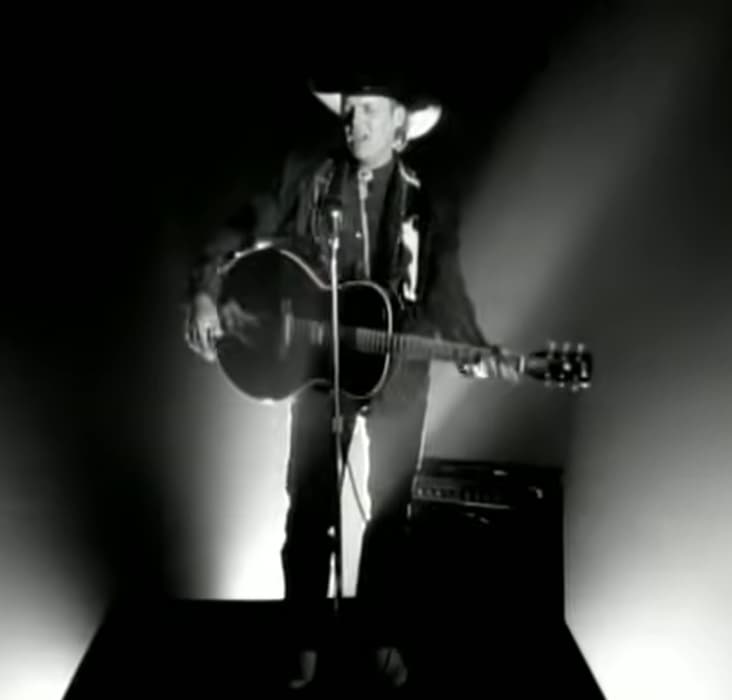
A monument to regret, carved not from stone but from the painful wisdom of a heart that realized its loss too late
When Ricky Van Shelton recorded “Statue Of A Fool” for his platinum-selling album RVS III in 1990, he was already one of country music’s most reliable hitmakers. Released as a single in late 1989, the song climbed to No. 2 on the Billboard Hot Country Singles chart and reached No. 1 in Canada, becoming one of the standout moments from an album that dominated the country landscape of the era. Originally written by Jan Crutchfield and first made famous by Jack Greene’s 1969 chart-topping version, Shelton’s interpretation introduced the song to a new generation while preserving every ounce of its emotional weight.
What makes “Statue Of A Fool” endure is not simply its tale of heartbreak. Country music has never lacked songs about lost love. Instead, its power lies in the unusual way it frames regret. The narrator does not beg for forgiveness, nor does he search for a path back to the woman he lost. He has already passed beyond hope. What remains is self-awareness—painful, undeniable self-awareness.
The song’s central image is one of the most memorable metaphors in classic country music. The “statue” is not a tribute to greatness or victory. It is a public warning. The narrator imagines himself immortalized as a fool, standing for all to see, a monument to poor judgment and squandered love. In that image lies the song’s brilliance. Most heartbreak songs focus on the person who left; “Statue Of A Fool” focuses on the person who failed to appreciate what he had while it was still within reach.
Shelton’s vocal performance understands this distinction perfectly. He does not sing with explosive anguish. Instead, he delivers each line with the weary resignation of a man who has replayed his mistakes a thousand times. His rich Virginia baritone carries the song with remarkable restraint, allowing the lyrics to do their work without unnecessary dramatics. That approach was one of Shelton’s greatest strengths throughout his career: he could make profound sorrow sound startlingly human.
Musically, the recording reflects the neotraditional country movement that defined much of the late 1980s and early 1990s. Steel guitar accents, understated instrumentation, and a clean, uncluttered production create space for the story. Nothing distracts from the emotional center of the song. Every note serves the narrative.
More than three decades later, “Statue Of A Fool” remains compelling because its message is timeless. Nearly everyone reaches a moment when hindsight becomes sharper than vision ever was. The song captures that universal experience with uncommon elegance. It reminds listeners that the deepest wounds are often not inflicted by others, but by the knowledge that we ourselves failed to recognize something precious until it was gone.
That is why the song still resonates. It is not merely about heartbreak. It is about accountability, memory, and the heavy burden of understanding the truth too late. In the grand tradition of country storytelling, Ricky Van Shelton transformed a simple ballad into something far more lasting—a mirror in which every listener can, at some point, see a reflection of their own regrets.