
There are bridges that remain unburned, because hearts still hold enough compassion to remember love.
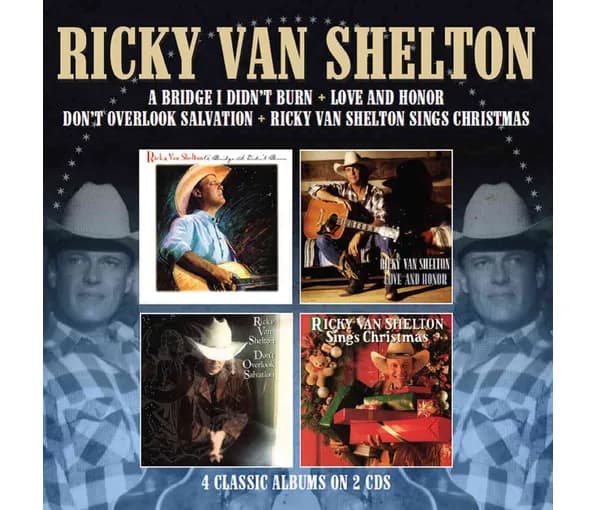
Featured in Ricky Van Shelton’s 1993 album, “A Bridge I Didn’t Burn,” this song emerged at a time when his career was entering a new chapter. Although the song itself wasn’t released as a single, the album reached number 17 on the Billboard Top Country Albums chart, entered the Billboard 200 at number 91, and was later certified Gold in the United States. This was a significant milestone during a period when Shelton was still considered one of the most authentic and heartfelt country singers of the early 1990s, even as the commercial landscape of Nashville was changing.
What makes “A Bridge I Didn’t Burn” endure beyond its chart numbers is the message it conveys. From its very title, the song evokes a highly symbolic image: a bridge not burned after a breakup. In Western culture, “burning bridges” signifies cutting off all escape routes, completely ending a relationship. But this song takes the opposite approach. It tells the story of a person brave enough to move on, but also kind enough not to destroy everything that was once beautiful. It’s not weakness or regret, but maturity gained through loss.
Ricky Van Shelton’s voice always possesses a special quality: he doesn’t need to show off his technique to make listeners believe the stories he tells. In “A Bridge I Didn’t Burn,” Shelton sings with a warm, calm voice, almost devoid of any overly dramatic moments. This restraint creates emotional weight. Each line is like a stream of reminiscence from someone who has weathered the storm, looking back on the past with a serene gaze instead of resentment. That subtle approach is also a characteristic that helped Shelton become one of the most beloved voices of the traditional country era.
Musically, the song fully embodies the spirit of early 1990s Nashville: lingering steel guitar, just the right amount of fiddle, a slow tempo, and harmonies built to support the story rather than overpower it. There are no elaborate arrangements or ambitions to go beyond the framework of classic country. Every element points towards the lyrics, where each image evokes a sense of regret but not despair. It is this simplicity that gives the song its timeless quality. Listeners of any generation can see themselves in relationships that have ended but never truly vanished from memory.
A noteworthy point is that the song doesn’t view the breakup as a failure. Conversely, it offers a rare perspective: sometimes a person’s greatest victory isn’t about keeping love, but about preserving one’s dignity after love ends. “Not burning the bridge” means not letting bitterness define who one is. It’s a message deeply rooted in traditional country music—where everyday stories reflect values of honesty, tolerance, and the ability to rise above hurt.
Three decades after its release, “A Bridge I Didn’t Burn” remains one of the most profound recordings in Ricky Van Shelton’s career. It may not be the most famous song on his list, but it’s a clear testament to the art of storytelling through music—where a simple image can contain a profound philosophy of life. And perhaps, precisely because not every bridge needs to be burned, this song continues to open a path back to the most beautiful memories of country music.