
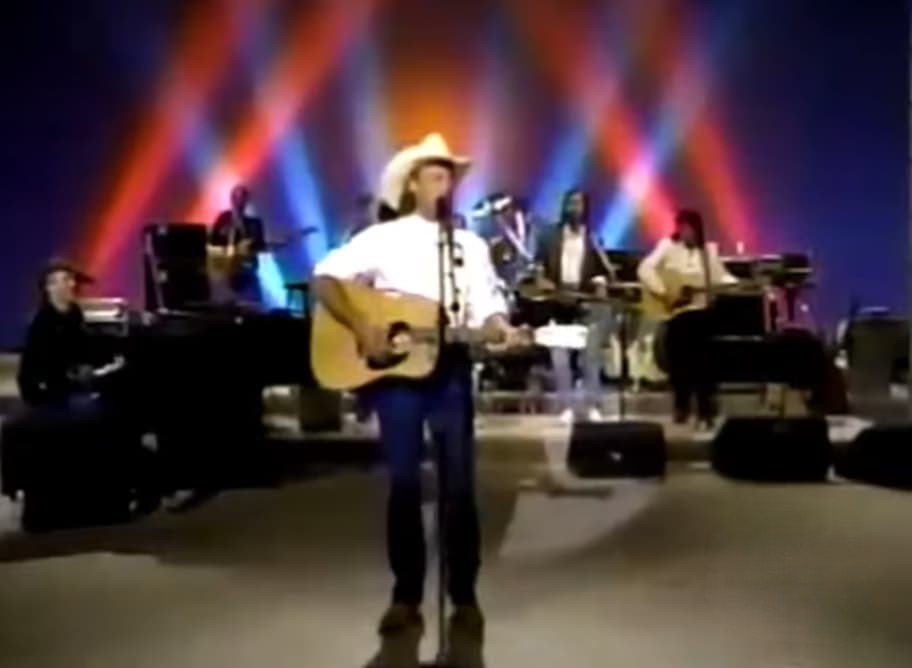
A Decade of Heartbreak, Faith, and Honky-Tonk Truth Captured in One Remarkable Voice
When discussing the great traditionalist voices that emerged during country music’s resurgence in the late 1980s, few names deserve greater recognition than Ricky Van Shelton. The compilation 10 Greatest Hits & #1 (1988–1998) stands not merely as a collection of successful singles, but as a portrait of one of country music’s most consistent and emotionally resonant performers. Spanning a decade of remarkable achievements, the album celebrates an era during which Shelton accumulated ten Billboard Hot Country Songs No. 1 hits, multiple platinum-selling releases, and a reputation as one of Nashville’s most authentic interpreters of heartbreak, devotion, faith, and everyday life.
Unlike many greatest-hits packages that simply assemble chart successes, 10 Greatest Hits & #1 (1988–1998) tells the story of an artist whose rise coincided with a renewed appetite for traditional country sounds. At a time when country music was embracing polished production and expanding commercial ambitions, Ricky Van Shelton remained deeply rooted in the genre’s classic foundations. His rich baritone voice, influenced by legends such as George Jones, Merle Haggard, and Lefty Frizzell, carried an honesty that felt increasingly rare in modern popular music. Whether singing about lost love, enduring commitment, or spiritual reflection, Shelton approached every lyric with a sincerity that transformed simple country songs into deeply personal experiences.
The collection traces an extraordinary run that began with breakthrough recordings from Wild-Eyed Dream (1987), the album that introduced Shelton to a national audience. Songs such as “Somebody Lied” demonstrated his ability to balance traditional country storytelling with contemporary appeal, helping establish him as one of Nashville’s most promising new voices. What followed was one of the most successful stretches of any country artist of the era. Throughout the late 1980s and early 1990s, Shelton repeatedly reached the top of the charts with songs that resonated across generations of listeners.
What makes this compilation particularly compelling is the emotional range it captures. The songs are united not by a single theme but by a shared commitment to truthfulness. In Shelton’s world, love is rarely simple. Relationships are fragile, memories linger long after romance fades, and redemption often arrives only after pain has run its course. Yet there is never a sense of cynicism. Even in his saddest performances, Shelton sings with empathy rather than bitterness, allowing listeners to recognize their own experiences within the stories he tells.
Tracks such as “Life Turned Her That Way” reveal his extraordinary gift for compassion. Rather than judging a wounded soul, the song asks listeners to understand the scars left behind by life’s hardships. Similarly, “I’ve Cried My Last Tear for You” transforms heartbreak into resilience, while “Statue of a Fool” explores regret with a vulnerability that recalls country music’s golden age. These recordings showcase Shelton’s greatest strength: his ability to make every emotional moment feel lived rather than performed.
Another defining characteristic of Shelton’s music is his respect for country tradition. During an era increasingly influenced by crossover ambitions, he continued to embrace steel guitars, fiddle-driven arrangements, and classic storytelling structures. His recordings never sounded nostalgic for nostalgia’s sake; instead, they felt timeless. The production supported the songs rather than overshadowing them, allowing Shelton’s voice to remain at the center of every performance. This commitment to authenticity helped distinguish him from many of his contemporaries and earned him a loyal audience that extended far beyond commercial trends.
The title’s reference to ten greatest hits and an additional No. 1 achievement carries symbolic weight. It reflects not only chart success but also a decade of artistic consistency. Few singers maintain such a high level of emotional credibility while simultaneously achieving widespread commercial popularity. Shelton managed both. His records appealed to longtime country traditionalists while attracting new listeners discovering the genre during one of its most commercially successful periods.
Today, 10 Greatest Hits & #1 (1988–1998) remains more than a retrospective. It is a testament to the enduring power of honest storytelling and heartfelt performance. In an industry often defined by changing fashions, Ricky Van Shelton built his legacy on something far more durable: a voice that sounded genuine, songs that spoke directly to the human experience, and a belief that country music’s greatest strength has always been its ability to tell the truth. Listening to this collection decades later, one is reminded that chart positions may mark a song’s success, but emotional authenticity is what allows it to endure.