
Love and heartbreak rarely arrive as opposites—they are often born from the very same promise.
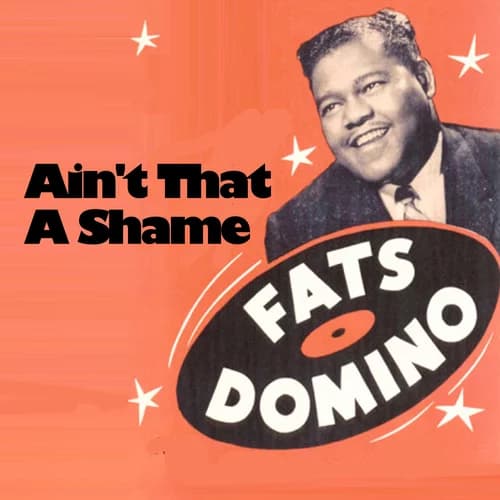
Released in 1955, “Ain’t That a Shame” became the breakthrough record that transformed Fats Domino from a beloved New Orleans rhythm and blues artist into a national sensation. Featured on the album Rock and Rollin’ with Fats Domino, the single climbed to No. 1 on the Billboard R&B Best Sellers chart while reaching No. 10 on the Billboard pop chart—a remarkable achievement during an era when racial barriers still sharply divided American popular music. Its success marked one of the defining moments in the crossover of rhythm and blues into mainstream culture, helping lay the foundation for what would soon be recognized as rock and roll’s golden age.
Few songs in the history of American popular music accomplish so much with such disarming simplicity. Co-written by Fats Domino and legendary producer Dave Bartholomew, “Ain’t That a Shame” is built upon an uncomplicated lyrical premise: the sorrow of watching love dissolve despite heartfelt devotion. Yet beneath its modest words lies a performance that captures an emotional contradiction familiar to anyone who has experienced heartbreak. Domino never delivers the song with bitterness or theatrical anguish. Instead, he sings with a gentle resignation, as though acknowledging that some wounds cannot be argued away—they can only be endured. That emotional restraint became one of his greatest artistic strengths, allowing listeners to find their own stories within his voice.
Musically, the record is a masterclass in economy. The rolling piano that had become Fats Domino’s signature carries the melody with effortless warmth, while the rhythm section swings with unmistakable New Orleans confidence. The arrangement never overwhelms the vocal; every note serves the song rather than competing for attention. Even the famous opening phrase feels conversational rather than dramatic, inviting the listener into an intimate confession instead of a grand performance. This balance between infectious rhythm and genuine vulnerability became one of the defining characteristics of Domino’s catalogue and distinguished him from many of his contemporaries.
The cultural significance of “Ain’t That a Shame” extends well beyond its commercial success. At a time when rhythm and blues records often struggled to cross into the mainstream, the song became one of the earliest examples of Black popular music reaching a broad American audience without sacrificing its identity. Its influence expanded further when Pat Boone’s cover version became an even larger pop hit, reflecting both the racial realities of the 1950s music industry and the undeniable strength of the composition itself. Yet history has increasingly restored rightful recognition to Fats Domino’s original recording, whose warmth, rhythmic sophistication, and emotional authenticity remain unmatched.
Listening today, “Ain’t That a Shame” feels remarkably timeless because it never depends on elaborate storytelling or fashionable production. Instead, it speaks through universal emotions wrapped in melodies that seem almost effortless. Domino’s piano dances even as his lyrics grieve, creating a poignant tension between joy and sorrow that has become one of rock and roll’s earliest signatures. It reminds us that heartbreak does not always silence the spirit; sometimes it teaches us to keep moving, one steady rhythm at a time.
More than seventy years after its release, “Ain’t That a Shame” continues to resonate not merely as a classic recording but as a defining chapter in American musical history. It captures the moment when the sound of New Orleans found its way into living rooms across the nation, carrying with it the optimism, resilience, and emotional honesty that would inspire generations of artists. In Fats Domino’s hands, a simple lament became something far greater: proof that the most enduring songs are often those that speak softly, trusting the truth of human feeling to echo long after the final piano chord fades.