
LOVE HURTS — THE MOMENT ROY ORBISON TURNED HEARTBREAK INTO SOMETHING ALMOST BEAUTIFUL
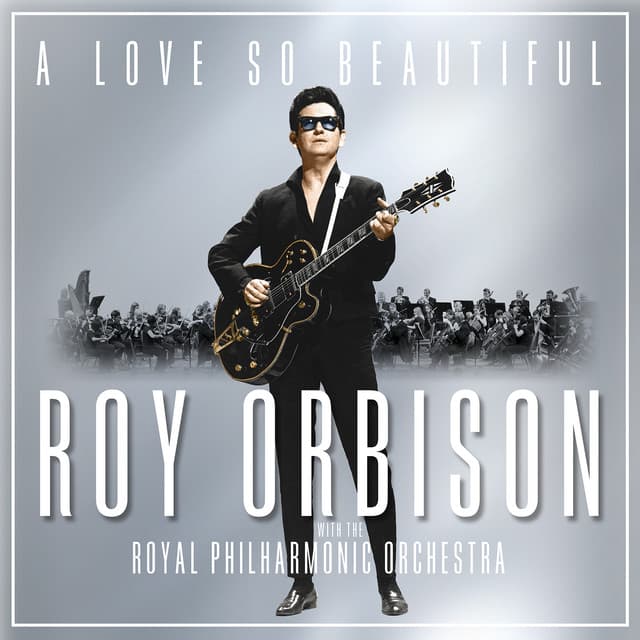
“Love Hurts” occupies a remarkable place in the catalogue of Roy Orbison, not because it was originally one of his biggest chart singles, but because its emotional power proved far greater than its commercial footprint. Written by Boudleaux Bryant, the song was recorded by Orbison during his early Monument Records period and first appeared in 1961; it was subsequently included on his 1962 album Crying. The original recording was associated with the era surrounding Running Scared, which became a major success, while “Love Hurts” itself did not achieve comparable standalone chart prominence in the United States. Decades later, Orbison’s original vocal was given a new orchestral setting on A Love So Beautiful: Roy Orbison with the Royal Philharmonic Orchestra, released in 2017. That album reached No. 2 on the UK Albums Chart, demonstrating how enduring Orbison’s voice remained long after his passing.
What makes this particular recording so compelling is the strange relationship between the age of the voice and the age of the emotion. Orbison was still a young man when he recorded “Love Hurts,” yet he sings as though he has already learned the lesson the song describes: love can leave scars, and tenderness can be dangerous precisely because it matters so much. The writing by Boudleaux Bryant is deceptively simple. Love is compared to physical pain, to rain held inside a cloud, to something capable of burning the person who reaches too close. There is no elaborate philosophical argument. Instead, the song builds its case through images that almost anyone who has experienced loss can understand.
That simplicity becomes more devastating through Orbison’s delivery. His voice never sounds as though it is merely complaining about heartbreak. There is distance in it, almost resignation. He seems to be examining emotional damage from the other side of the experience, trying to understand why something that promises happiness can become a source of suffering. That tension is central to Orbison’s artistry: beauty and despair rarely exist separately in his music.
The 2017 Royal Philharmonic version adds another layer to that meaning. Produced by Don Reedman and Nick Patrick, the project placed Orbison’s original vocal performances against newly recorded orchestral arrangements, with the orchestral sessions recorded at Abbey Road Studios. The effect is not simply decorative. The sweeping orchestration makes the song feel almost cinematic, as though an intimate confession has been placed inside a much larger emotional landscape.
And that is why “Love Hurts” continues to resonate. It does not promise that heartbreak makes us stronger. It offers something more honest: the recognition that vulnerability is part of loving at all. In Orbison’s voice, that realization becomes neither bitter nor sentimental. It simply becomes true.
The years have changed the recording, the arrangement, and the audience—but the wound at the center of “Love Hurts” remains remarkably untouched.