
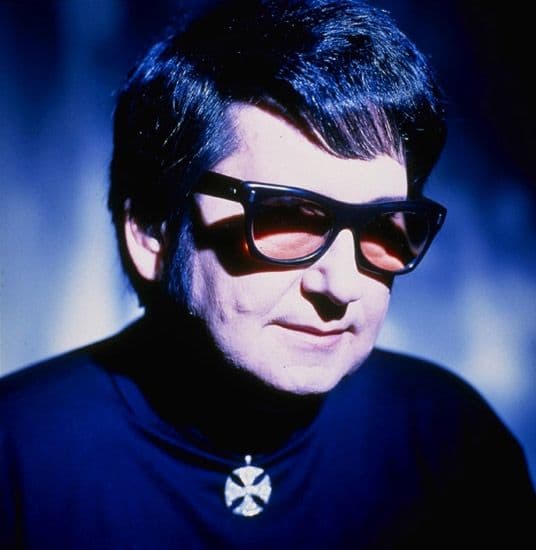
A simple song of pure, unblemished devotion that captures the giddy, singular focus of first love.
There are certain songs, seemingly simple on the surface, that manage to bottle the very essence of a bygone era. They carry the faint, wonderful scent of a 1960s dance hall or a late-night drive on a summer road, and for those of us who remember those days, they are a powerful, bittersweet tonic. Among the most cherished of these is “Lana,” a delightful, mid-tempo offering from Roy Orbison, a man whose dark, operatic ballads usually dealt in far more profound shades of heartbreak and loneliness.
Released in the UK in June 1966, this captivating track was a belated single from his magnificent 1962 album, Crying. Though the original 1962 album version didn’t chart as a single in the US, the UK re-release found its audience, rising to a respectable Peak Position of 15 on the Official Singles Chart. Its success in ’66—at a time when the British Invasion had thoroughly changed the musical landscape—is a testament to Orbison‘s enduring genius and the universal appeal of his unique sound.
The Song’s Story and Meaning
Unlike the dramatic pathos of a classic like “Crying” or “Running Scared,” “Lana” is a song of uncomplicated joy. It’s a pure, unadulterated declaration of puppy love, a lyrical picture of a young man utterly smitten with a girl he calls “the sweetest and neatest girl in the world.” Co-written by Orbison and his frequent collaborator Joe Melson—the same brilliant mind behind hits like “Only The Lonely” and “Blue Angel”—the song is driven by a gentle, almost skipping rhythm, a sound that mirrors the narrator’s lighthearted, buoyant feeling.
The lyrics revolve around the simple, yet profound, desire to be remembered: “Gonna hug you and kiss you and go / So you’ll remember me while I’m gone / Lana, Lana, Lana, oh, oh, oh, oh.” It’s not a song about loss or betrayal; it’s a song about the beautiful, almost painful anticipation of temporary separation and the comforting certainty of return. For a brief, shining moment, “The Big O” drops his trademark cloak of tragedy and allows himself to feel the sunny warmth of youthful infatuation. It’s a beautifully vulnerable performance, showing the man beneath the dark glasses could sing about the light just as effectively as the dark.
A Reflective Tone
Listening to “Lana” today, it feels like stumbling upon a hidden photograph from a gentler time. The rich, full orchestration, with its gentle strings and backing vocals, is classic Monument Records production—a sound that was a sophisticated alternative to the raw energy of rock and roll. It reminds us of an era when pop music aimed for cinematic scope, and Orbison’s voice, though not soaring into its highest registers as it did in his power ballads, retains that marvelous, trembling quality that made him so uniquely expressive.
When you hear that name, “Lana,” delivered with such tender sincerity, it’s impossible not to recall your own first “Lana”—that person who, for a time, was the singular, all-consuming focus of your heart. In a career defined by high drama and deep, resonating sadness, “Lana” is an essential piece of the Roy Orbison puzzle: proof that even the most tragic figures can pause to celebrate the simple, dizzying pleasure of finding that one person who makes the world feel neat and sweet. It’s a charming throwback, a little splash of summer sunshine in Orbison‘s otherwise magnificent, rain-swept musical world, and a lovely echo for those who remember the sound of love in the early sixties.