
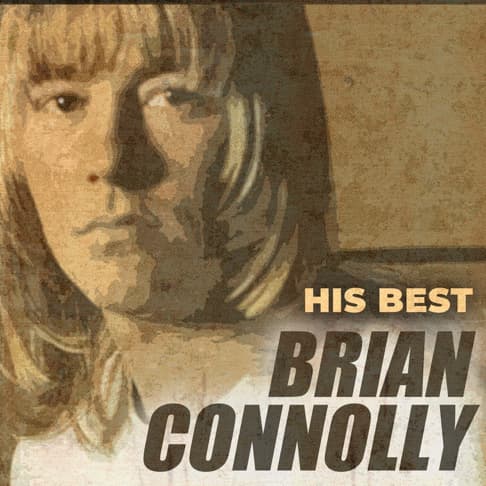
A defiant echo of rock and roll swagger from a wounded voice refusing to fade into silence
Released in the mid nineteen seventies, Rebel Rouser marked a crucial and revealing moment in the solo career of Brian Connolly, best known as the unmistakable voice of Sweet. Issued as a standalone single following his departure from the band, the song achieved a modest but notable presence on the UK charts, enough to signal that Connolly still commanded attention even as the glam rock era that crowned him was beginning to recede. Unlike the meticulously produced anthems that had dominated Sweet albums such as Desolation Boulevard, Rebel Rouser arrived without the protective sheen of a dominant group identity. It stood as a personal statement, both musically and symbolically, from an artist fighting to reassert himself.
At its core, Rebel Rouser is an act of reclamation. The song famously reworks the spirit of the classic rock and roll instrumental popularized by Duane Eddy, transforming its twanging bravado into a vocal performance that carries layers of subtext. Connolly does not merely sing over a familiar riff. He inhabits it. The result is a track that feels less like nostalgia and more like confrontation, a deliberate reaching back to the raw DNA of rock and roll at a time when Connolly’s own career had entered uncertain territory.
By this point, Connolly’s life had already taken a heavy toll on his instrument. Years of relentless touring, excess, and physical strain had damaged his voice, stripping away some of its former brightness while replacing it with a rasp that was rougher and more fragile. Rather than conceal this change, Rebel Rouser places it front and center. The vocal performance is not pristine, but it is emotionally exposed. There is defiance in the phrasing, but also an undercurrent of vulnerability, as though Connolly is daring the listener to hear both the strength and the scars.
Lyrically, the song leans into archetype rather than autobiography. The rebel figure it presents is not a detailed character but a symbol, a stand in for restless energy and refusal to conform. Yet within Connolly’s delivery, the symbolism becomes personal. This is a man who had tasted massive success, lost control of his narrative, and was now attempting to write a new chapter on his own terms. The music reinforces this tension. The driving rhythm and sharp guitar lines evoke the early days of rock and roll rebellion, while the production reflects a seventies sensibility that acknowledges time’s passage rather than denying it.
Culturally, Rebel Rouser occupies a liminal space. It is neither a full scale comeback nor a quiet epilogue. Instead, it functions as a snapshot of an artist in motion, caught between legacy and survival. For listeners who knew Connolly only as the flamboyant frontman of Sweet, the song offers a sobering and compelling reframing. It strips away the glitter and leaves behind something more elemental.
In retrospect, Rebel Rouser resonates less as a chart entry and more as a document of resilience. It captures the moment when Brian Connolly, no longer sheltered by a band or an era, stood alone and chose volume over retreat. In that choice lies the song’s enduring power, not as a revival of past glory, but as an honest echo of a rebel spirit that refused to go quietly.