
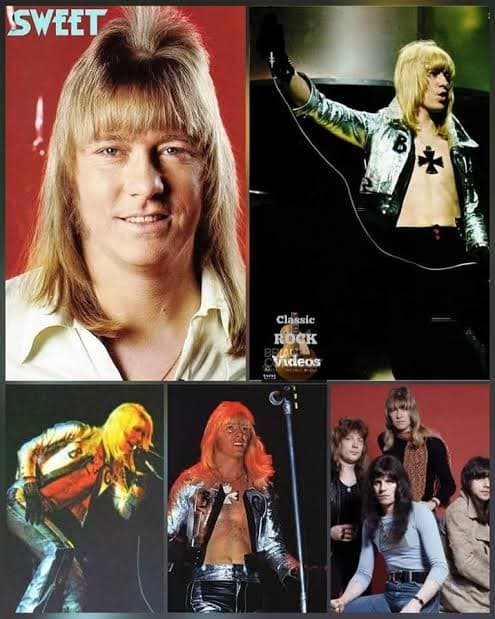
Wounded voice searching for redemption, turning hard rock into a confessional plea
When Brian Connolly stepped to the microphone to sing Healer with Sweet in Japan in 1976, the song already carried the weight of a pivotal moment in the band’s history. Originally released on Give Us a Wink, an album that marked Sweet’s fierce mid-1970s resurgence and spawned the UK No. 2 single Action, Healer was never designed as a chart contender itself. Instead, it functioned as a statement piece: introspective, bruised, and defiantly human. Performed live during the band’s Japanese tour, the song took on a sharper edge, transforming from studio introspection into public reckoning, delivered by a singer whose own life was beginning to fracture under pressure.
At its core, Healer is not about salvation granted from above, but about the desperate hope that someone, somewhere, might understand the damage already done. Lyrically, it stands apart from Sweet’s glam anthems and swaggering hooks. There is no irony here, no cartoon bravado. The song unfolds as a confession, paced deliberately, allowing space for vulnerability in a catalogue otherwise defined by volume and velocity. This contrast is precisely why it endures. In the architecture of Give Us a Wink, Healer acts as the emotional counterweight, revealing the cost behind the noise.
Brian Connolly’s performance in Japan deepens that subtext. By 1976, Connolly was carrying visible strain: physical injuries, vocal challenges, and the psychological toll of relentless touring. None of this needs to be spelled out in the lyric, because it surfaces naturally in his delivery. His voice, still capable of sweetness and power, carries a rasp that feels earned rather than stylized. On stage, Healer becomes less a song and more a quiet admission, sung in front of thousands yet aimed inward. Each line lands with restraint, as if he is measuring how much truth he can afford to reveal.
Musically, the song reinforces this tension. The arrangement is solid but never showy, grounded in a steady pulse that allows Connolly’s phrasing to lead. The guitars resist flamboyance, favoring weight over flash, while the rhythm section holds firm, almost protective. In the live Japanese performance, the band plays with discipline, understanding that excess would fracture the mood. Sweet, so often celebrated for spectacle, demonstrate here that control can be just as powerful.
Culturally, Healer represents a moment when glam rock briefly dropped its mask. It reminds listeners that beneath the makeup, platforms, and chart success were individuals grappling with exhaustion, expectation, and self-doubt. For longtime listeners, the song feels prophetic. For new ones, it offers a different entry point into Sweet’s legacy: not as hitmakers alone, but as craftsmen capable of emotional risk.
In the Japanese concert halls of 1976, far from home yet intensely focused, Brian Connolly sang Healer not as a plea for applause, but as an act of survival. That honesty, preserved in live performance, is what still echoes in the grooves of Sweet’s history.