
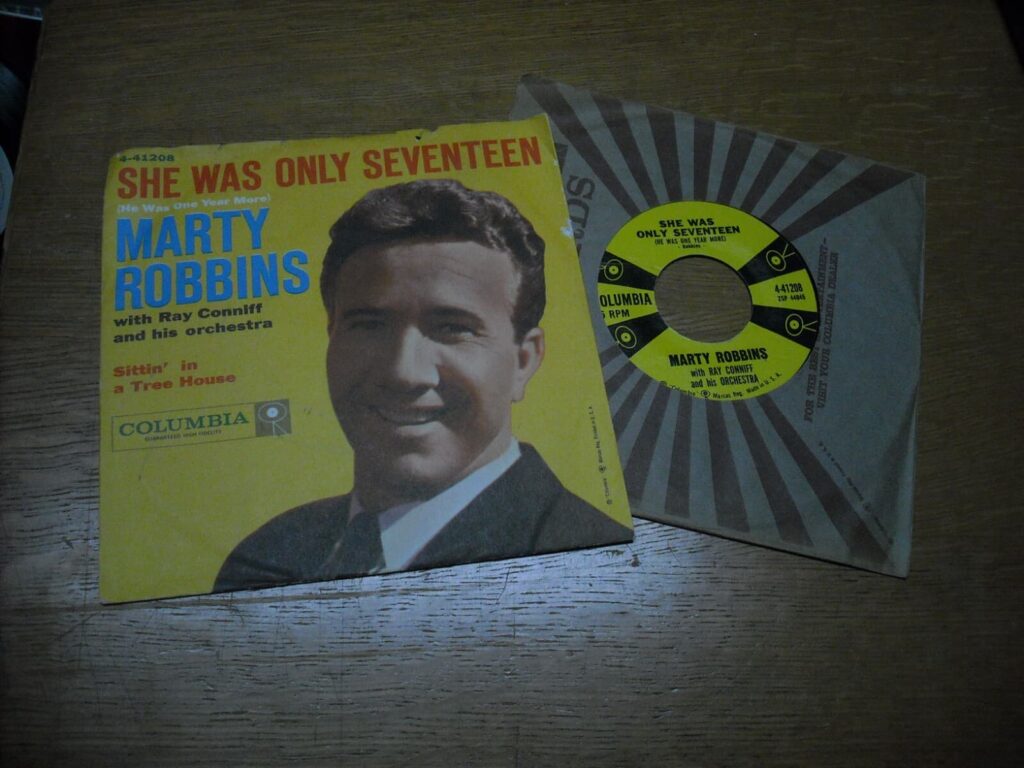
Marty Robbins – But Only In My Dreams: A Tender Confession Caught Between Memory and Longing
In the spring of 1965, when the Nashville sound was blooming into pop‑inflected country across American airwaves, Marty Robbins offered a subtler shade of emotion with “But Only In My Dreams”, a track featured on his album Turn the Lights Down Low. Though it was not promoted as a chart‑topping single in the way some of his more dramatic narratives like “El Paso” had been, the song became a cherished deep cut among dedicated listeners of Robbins’s work from that period. It exemplifies his versatility as an interpreter of love’s wistful shadows and underscores his ability to find profound expression in simplicity. Turn the Lights Down Low was released in 1965 and includes “But Only In My Dreams” among other romantic and melancholic pieces that showcase Robbins’s range as a vocalist and storyteller.
At its heart, “But Only In My Dreams” is an exploration of longing without resolution. The lyrics unfold as a confession of love experienced only in solitude and imagination. Robbins sings of holding the beloved “in my arms” and knowing her “sweetest charms,” yet acknowledges that such intimacy exists solely within the realm of dreams. The contrast between the starkness of waking life and the vividness of the nocturnal world in which his love feels “really true” is at once tender and heartbreaking. This dynamic places the song firmly within the classic American tradition of country balladry that values emotional transparency and narrative clarity.
Musically, the track’s languid tempo and gentle accompaniment reinforce the poem‑like quality of the lyrics. Robbins’s voice, resonant and unadorned, carries the melody with a sense of restraint that amplifies its emotional core: the recognition that some desires are destined to be felt inwardly rather than realized outwardly. In a broader sense, the song embodies a universal condition of longing for connection that listeners from any era can identify with. It does not revel in dramatic turning points or bold declarations; instead, it dwells in the quiet spaces of memory and yearning, where love feels most vivid yet most unattainable.
The setting of Turn the Lights Down Low as an album further contextualizes “But Only In My Dreams” within Robbins’s mid‑career output, a time when he was balancing honky‑tonk roots with the smoother textures of contemporary country production. Though the song itself did not carve a singular place on the Billboard charts, its inclusion on the album and continued presence in lyric archives and streaming collections speak to its enduring resonance for aficionados of Robbins’s quieter moments. Listeners often respond to this track not because of commercial success, but because of its profound emotional honesty.
In the tapestry of Robbins’s extensive catalog, “But Only In My Dreams” stands as a testament to his ability to inhabit the subtler contours of human feeling. It is a nocturne of unfulfilled affection, an intimate confession gifted to the night rather than broadcast to the crowd. Its power lies not in dramatic storytelling or chart dominance, but in the way it mirrors the listener’s own private longings, inviting reflection on the dreams we carry close to the heart long after the record stops spinning.