
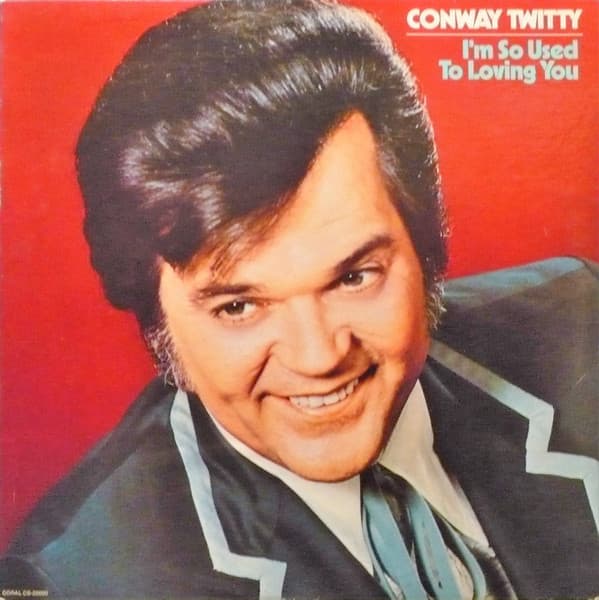
A Devotion Too Deep To Ever Be Ordinary
“I’m So Used To Loving You” occupies a unique place in the early 1970s canon of Conway Twitty, not as a chart-topping single but as a quietly resonant statement of love nestled within his Hello Darlin’ album from 1970. The song demonstrates Twitty’s multifaceted artistry at a moment when he was already established as one of country music’s most emotionally direct voices, yet still deeply rooted in the tradition of heartfelt narrative and subtle musical nuance. The track did not chart as a single, but its enduring presence in streaming playlists and compilations speaks to its lasting appeal among devoted listeners who return to Twitty’s catalogue for moments that feel lived‑in and intimately personal.
From the first strains of its gentle melody, “I’m So Used To Loving You” situates the listener in a space of habitual longing. Twitty’s vocal delivery is plainspoken yet rich with subtext, a hallmark of his interpretive skill: he never merely sings the sentiment, he inhabits it. The arrangement follows the conventions of classic country balladry with unobtrusive steel guitar and warm piano underscoring the emotional core, a musical canvas that lets the lyric’s sincerity take shape without artifice.
Written by Twitty himself, the song stands as a testament to his songwriting at a period when he was not only interpreting the work of others but contributing compositions that reflected his own sensibilities. It opens with the refrain of devotion that serves as the song’s emotional heartbeat: a declaration that loving someone has become as intrinsic as breathing. These lines are simple in their construction but profound in effect, capturing the paradox of love as both solace and dependency.
Where many love songs of the era articulate passion as an ideal to be pursued, “I’m So Used To Loving You” frames love as something already integral to the self. There is no dramatic crisis here, no plea for reciprocation or fear of loss; instead, there is a calm yet unmistakable recognition of what love has already done to the speaker’s inner landscape. This emotional texture aligns the song with Twitty’s broader thematic concerns during this phase of his career: an exploration of mature, grounded affection that acknowledges vulnerability without collapsing into melodrama.
Musically and lyrically, the song captures the subtle rhythms of everyday intimacy—the whispered greeting at day’s end, the aching thought of separation, the quiet reassurance of presence. In these details, the track achieves a universal resonance: listeners familiar with the weight and comfort of long‑standing love will recognize in Twitty’s words their own private histories.
Though it was never a single in the commercial sense, the cultural afterlife of “I’m So Used To Loving You” resides in its ability to evoke the steadfastness of love that persists through ordinary days. Fans have kept it alive not through radio charts but through memory and affection, positioning it alongside Twitty’s more prominent hits as a hidden gem that rewards deeper engagement. In this way, the song exemplifies a quiet strength: a declaration not of love at its inception, but of love as a familiar, indispensable companion.