
A Reckoning of Desire and Moral Strain Woven Through the Quiet Echoes of Midnight
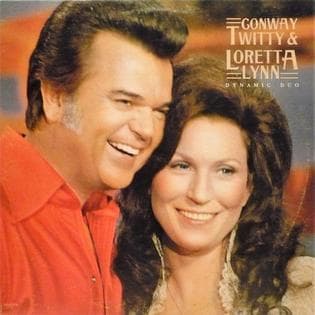
In the rich tapestry of Conway Twitty and Loretta Lynn’s collaborative work, “Our Conscience You and Me” occupies a singular space: not a chart-topping single but a haunting narrative centerpiece tucked into Louisiana Woman, Mississippi Man, the 1973 duet album that showcased two of country music’s most distinct voices intertwining with intimacy and candor. The record itself was a commercial success, emblematic of the era’s appetite for authentic, emotionally charged country duets, yet this particular cut never emerged as a single climbing the charts. Its power resides not in airplay metrics but in the unsettling moral terrain it charts for listeners.
From the moment the opening lines unfold, the song betrays its core conflict: irresistible passion nestled against the weight of conscience. The narrative voice is not abstract or grandiose but sharply personal, a confession whispered over pedal steel and contemplative guitar. The lovers at its core are bound by a magnetic attraction that flouts propriety. They meet “while someone else waits at home,” a line that encapsulates the wrenching push and pull between desire and duty. This is not a jaunty tale of secret passion but a stark, introspective portrayal of lovers who recognize their transgression even as they surrender to it.
Musically, the composition supports this tension with graceful understatement. The arrangement allows Twitty and Lynn’s voices to intertwine with a tenderness that belies the ethical ambiguity in the lyrics. The melody settles into a reflective cadence that feels less like a traditional hook and more like a slow, enduring echo of unresolved feeling. In this respect, the song’s structure mirrors the thematic heart of the piece: a circular meditation on love that cannot be fully claimed or dismissed.
Lyrically, “Our Conscience You and Me” does not moralize so much as articulate the internal struggle of those caught between competing instincts. There is a palpable sense of rationalization—“if the love’s so strong this wrong why should it be”—yet the phrasing betrays an awareness of the cost borne by all involved. The lovers do not proclaim innocence; instead they acknowledge the tension between their passion and what they know to be right. It is a theme that resonates precisely because it refuses easy resolution.
Within Louisiana Woman, Mississippi Man, an album that yielded chart-topping singles and showcased the duo’s chemistry, this song stands apart as a moment of raw introspection. It is not built for the bright lights of radio success but for the quieter spaces of listening where nuance is prized and emotional complexity is honored. In that sense it epitomizes the depth for which both Twitty and Lynn were revered: the ability to give voice to the contradictions that reside in the human heart, turning a simple country ballad into a meditation on conscience, fidelity, and the enduring weight of desire.