
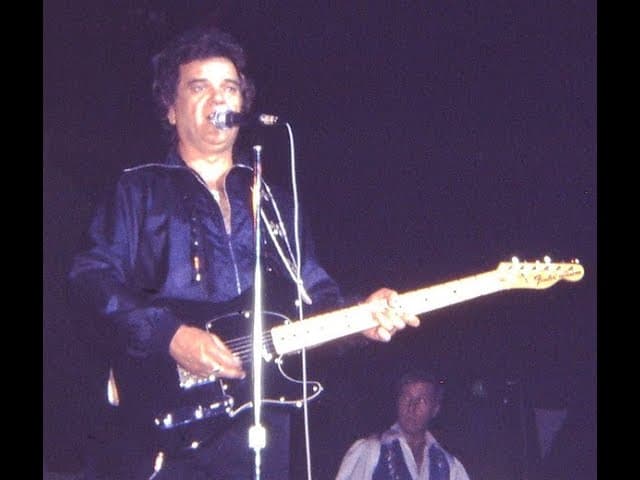
A declaration of small town pride that became a mirror for a divided American soul
Released in 1969, OKIE FROM MUSKOGEE reached number one on the Billboard Hot Country Singles chart and anchored the album OKIE FROM MUSKOGEE by MERLE HAGGARD AND THE STRANGERS, quickly becoming one of the most recognizable statements in modern country music. When CONWAY TWITTY later took the song into his own repertoire, he was not borrowing a novelty or a slogan. He was stepping into a cultural conversation already charged with history, identity, and quiet defiance, and refracting it through his own distinctly emotional lens.
At its core, OKIE FROM MUSKOGEE is a song that sounds deceptively simple. Its lyrics list ordinary values, modest habits, and a way of life rooted in tradition. Yet those plainspoken lines arrived at a moment when America was anything but simple. The late nineteen sixties were marked by protests, generational fractures, and a widening gulf between rural and urban identities. In that climate, the song landed not merely as entertainment but as a declaration. It spoke for listeners who felt unseen, unheard, and quietly dismissed by the dominant cultural narrative of the time.
MERLE HAGGARD often described the song as observational rather than ideological, a snapshot of people he knew and places he recognized. Muskogee, Oklahoma functioned less as a literal town and more as a symbol of rootedness. The brilliance of the writing lies in its restraint. There is no sermon, no raised voice. The song states what it is, and in doing so, invites interpretation. Some heard pride. Others heard provocation. That tension helped ensure its longevity.
When CONWAY TWITTY approached OKIE FROM MUSKOGEE, his interpretation subtly shifted the emotional center. Twitty was a master of empathy, an artist whose voice carried vulnerability even when singing about certainty. In his hands, the song becomes less about drawing lines and more about understanding why those lines exist. His delivery emphasized humanity over stance, suggesting not a challenge to outsiders but a quiet affirmation for those who recognized themselves in the words.
Musically, the song’s straightforward structure supports its message. The melody moves with the steadiness of everyday life, unadorned and confident. The instrumentation favors clarity over flourish, allowing the lyrics to stand exposed. This simplicity is precisely why the song endures. It does not chase trends or dramatics. It waits patiently, confident that its truth will find its audience.
Over time, OKIE FROM MUSKOGEE has evolved into a cultural artifact, cited, debated, and revisited as America continues to wrestle with questions of identity and belonging. Through CONWAY TWITTY, the song gained an additional layer of emotional resonance, proving that great songs are not fixed monuments. They are living documents, capable of reflecting different hearts without losing their core.
In the end, OKIE FROM MUSKOGEE endures because it speaks softly about things people feel deeply. It reminds listeners that music does not need to shout to be heard. Sometimes, it only needs to stand its ground and tell the truth as it sees it.