
Love Soaring Beyond Reach, Yet Doomed to Circle in Its Own Shadow
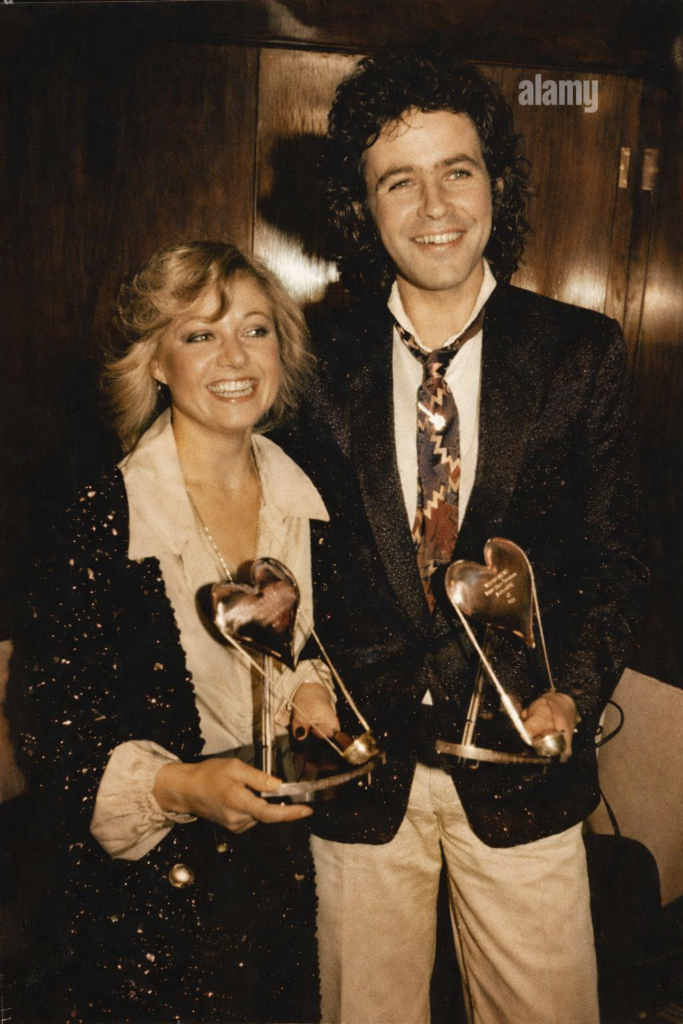
When David Essex and Elaine Paige unveiled High, Flying Adored in 1978 as part of the original concept album Evita, the song quickly became one of the production’s most discussed moments. Written by Andrew Lloyd Webber and Tim Rice, and later embedded within the stage phenomenon that would captivate London’s West End and beyond, the duet carried the dramatic weight of the musical’s emotional architecture. As a single drawn from the celebrated Evita album, it helped propel the record’s formidable commercial success in the UK charts and cemented the pairing of Essex and Paige as definitive early interpreters of the score.
At its core, High, Flying Adored is less a love song than a study in power, projection, and illusion. It unfolds as a charged dialogue between Eva Perón and Che, two figures locked not in romance but in ideological tension. Eva stands at the apex of her myth, adored by a nation. Che observes from the margins, interrogating the machinery of that adoration. What gives the number its enduring potency is the way it entwines admiration with accusation. The melody ascends with near-operatic grandeur, mirroring Eva’s meteoric rise, yet the harmonic undercurrent carries a tremor of instability, hinting at the fragility beneath the spectacle.
The song’s structure is quintessential Lloyd Webber: a soaring, arching line that invites the voice to climb ever higher, only to hover precariously before resolution. In Elaine Paige’s interpretation, Eva is incandescent, defiant, intoxicated by her own mythos. Her phrasing suggests both vulnerability and steel. David Essex, as Che, counters with a more grounded intensity, his tone edged with skepticism. Their vocal interplay becomes theatrical dialectic. She sings of destiny and transcendence; he questions the scaffolding that holds her aloft.
Lyrically, Tim Rice crafts a portrait of celebrity long before the term dominated cultural discourse. The idea of being high, flying, adored speaks to the intoxicating rush of public worship. Yet embedded in the text is the warning that such elevation distances one from reality. The higher the ascent, the thinner the air. Eva’s ascent is painted as both triumph and peril, her adoration inseparable from isolation.
In the broader tapestry of Evita, the song marks a pivotal emotional checkpoint. It crystallizes the central tension of the musical: the gap between personal ambition and collective perception. Decades on, High, Flying Adored remains a masterclass in musical storytelling. It is theatre distilled into four minutes of melody and argument, a reminder that the brightest lights often cast the longest shadows.