
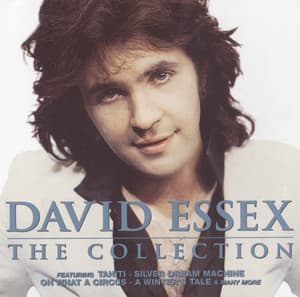
The Grandeur of Illusion: A Look Back at David Essex’s Shimmering, Mystical Soundscape
For those of us who came of age amidst the flared trousers and the shimmering theatricality of the 1970s, the name David Essex evokes a potent cocktail of rebellious charm, matinée idol good looks, and a wonderfully restless musical spirit. He was never one to be easily pigeonholed, shifting seamlessly from the raw, driving rock of his early hits to the expansive, almost mystical balladry that defined his later career. One of the most intriguing, and perhaps most overlooked, monuments to this transitional period is the song “Imperial Wizard”, the title track from his 1979 album of the same name.
While the accompanying album, Imperial Wizard, provided a solid, if not blockbuster, continuation of his chart success—it peaked at Number 12 on the official UK Albums Chart upon its release in March 1979—it is the title song itself that holds a particular, almost cinematic allure. Unlike the playful glam-rock energy of “Gonna Make You a Star” or the timeless romance of “A Winter’s Tale,” “Imperial Wizard” possesses a heavier, more reflective quality, a magnificent five-minute slice of introspective rock that felt deeply relevant to the man who had, by this point, spent nearly a decade navigating the tumultuous waters of British stardom.
The song is not about a literal sorcerer or a figure of dark magic, but rather a profound meditation on the illusion of power and control that fame bestows. It’s a theme that would resonate deeply with anyone over a certain age who has watched the brightest stars eventually dim, or who has experienced the hollow echo of a success that doesn’t quite fulfill the soul. David Essex, who wrote the track, was a superstar who had tasted the dizzying highs of both the music world and the West End stage (most notably as Che Guevara in Evita). The lyric explores the performer’s dilemma: the pressure to maintain a shimmering, all-powerful persona—the “Imperial Wizard”—even when the man beneath the costume feels ordinary or lost. The music, with its dramatic swells, orchestral strings (courtesy of the London Philharmonic Orchestra), and a soaring, somewhat melancholic melody, perfectly underscores this internal conflict.
The story behind the album’s creation sits firmly in the late 70s, a period when Essex was broadening his artistic scope. Having just starred in the original concept album for Jeff Wayne’s Musical Version of The War of the Worlds in 1978, his sound was moving away from simple pop structures toward a more ambitious, narrative-driven style. “Imperial Wizard” acts as a bridge, fusing his unmistakable vocal warmth with a more sophisticated, progressive-rock arrangement, co-produced by Christopher Neil. It’s a song for the thoughtful fan, the one who saw past the pin-up poster to the artist wrestling with deep questions about identity.
Listening back to it now, the track is a magnificent time capsule, reminding us not just of a great voice and a stirring tune, but of an era that appreciated a rock star who was willing to wear his vulnerabilities on his sleeve, even if cloaked in the grand metaphor of a magical showman. The shimmering instrumentation and Essex’s impassioned delivery capture the very essence of nostalgia—the realization that the past, like the “Wizard’s” magic, often appears grander and more powerful in retrospect than it did in the moment. It stands as a beautiful, slightly enigmatic highlight in a career defined by its willingness to explore the complexities of a life lived in the spotlight. It’s a poignant whisper from a bygone age, reminding us that even the mightiest illusions are built on fragile, human foundations.