
A tender promise between two aging hearts, holding onto love as time quietly slips away
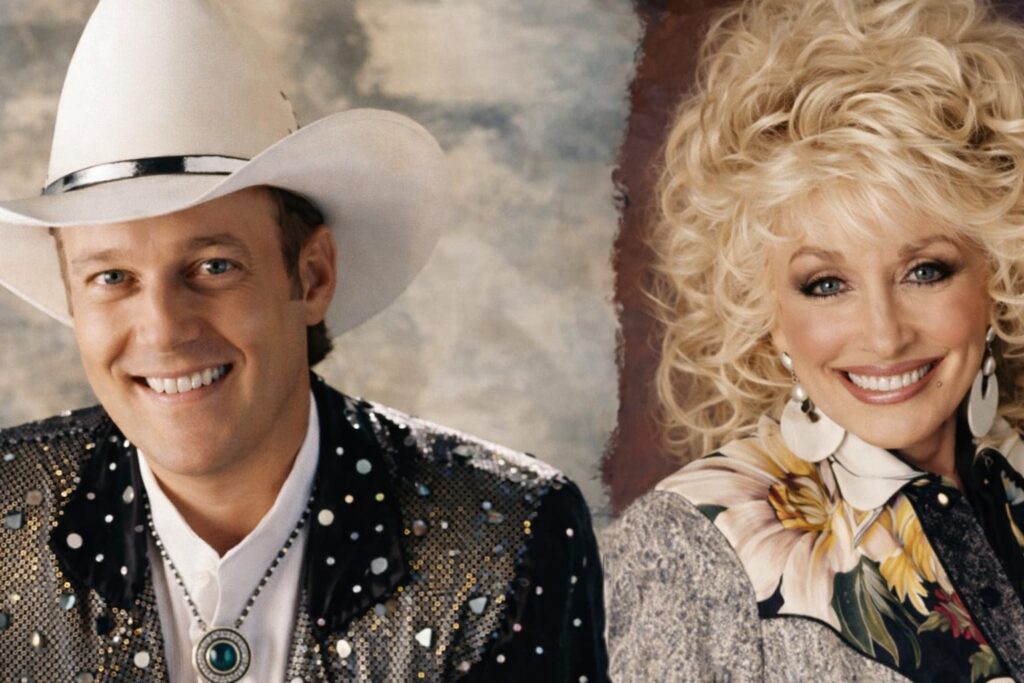
When Dolly Parton released Rockin’ Years with Ricky Van Shelton in 1991, the song quickly found its way into the emotional center of country music listeners. Featured on Dolly Parton’s album Eagle When She Flies, the duet climbed to No. 1 on the Billboard Hot Country Singles & Tracks chart, becoming one of the most beloved collaborations of her later career. It was a remarkable moment that united two powerful voices from different corners of country music’s evolving landscape, delivering a ballad that felt timeless from its very first note.
Written by Floyd Parton, Dolly’s brother, Rockin’ Years carries the kind of sincerity that only family-rooted storytelling often achieves. The song unfolds as a conversation between two lovers who have journeyed through the long seasons of life together. There is no youthful drama here, no reckless passion burning bright and fading fast. Instead, the lyric rests on something deeper: a promise that love, once proven through hardship and time, grows steadier rather than weaker.
The emotional architecture of Rockin’ Years lies in its quiet realism. The title itself suggests a gentle paradox. Rock and roll traditionally celebrates youth, movement, and rebellion. Yet here the phrase takes on a completely different meaning. These are not the wild years of youth but the rocking-chair years of old age, when life slows down and memory becomes the soundtrack of everyday moments. The song imagines that stage not as decline but as fulfillment. The lovers vow that when their hair turns silver and their steps grow slower, they will still lean on each other just as they always have.
Musically, the arrangement reflects the graceful restraint that defined much of Dolly Parton’s work during the late 1980s and early 1990s. Gentle acoustic instrumentation, understated steel guitar, and soft harmonies allow the story to breathe. When Ricky Van Shelton enters the duet, his deep baritone provides a grounding contrast to Parton’s bright, crystalline tone. Their voices meet not in competition but in mutual reassurance, each line sounding like a shared memory.
What makes Rockin’ Years endure is its universality. In a genre often filled with songs about heartbreak or longing, this composition celebrates something rarer: the quiet triumph of a love that survives the decades. It speaks to couples who have weathered illness, financial hardship, changing times, and personal doubt. The song suggests that the greatest victory is not dramatic romance but the simple act of staying.
For Dolly Parton, whose songwriting has always balanced storytelling with emotional honesty, Rockin’ Years stands as one of the most graceful reflections on enduring partnership in modern country music. Long after trends shift and charts change, its message remains deeply human: when the noise of youth fades, love becomes the steady rhythm that carries two people gently into their rocking years.