
A Teenage Heartbeat Turned Into One of Pop’s Most Tender Farewells to Innocence
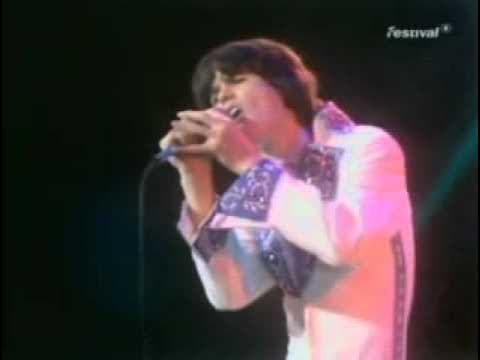
When Donny Osmond stepped onto the stage of Top of the Pops in 1972 to perform “Puppy Love,” Britain was witnessing far more than another teen-idol moment. The single surged to No. 1 on the UK Singles Chart, becoming one of the defining pop phenomena of its era, while also strengthening Osmond’s extraordinary international popularity during the height of Osmondmania. Originally featured on the album Too Young, the song carried with it an unusual dual legacy: it was both a revival of an earlier Paul Anka composition from 1960 and a complete emotional rebirth in the hands of a young singer whose voice embodied vulnerability with startling sincerity.
What makes “Puppy Love” endure is not its innocence alone, but the seriousness with which it treats youthful emotion. Lesser pop songs about adolescent romance often reduce young love to novelty or sentimentality. This recording refuses to do that. The narrator does not merely plead to be understood; he quietly insists that the emotional world of the young is every bit as real and devastating as that of adults. That tension—between innocence and emotional legitimacy—is the song’s true dramatic engine.
By 1972, the cultural climate surrounding teen idols had already begun to shift. Rock music was becoming heavier, more cynical, more politically conscious. Yet Donny Osmond represented something radically unfashionable: gentleness. His performance style carried none of the swagger dominating much of early-1970s popular music. Instead, he sang with a trembling earnestness that seemed almost defenseless. In hindsight, that quality explains why audiences responded so intensely. The performance did not feel manufactured to young listeners; it felt personal, almost confessional.
The arrangement itself is deceptively restrained. Soft orchestration, carefully controlled crescendos, and measured pacing leave room for the vocal to remain central. The production understands that the emotional power lies not in complexity, but in fragility. Every phrase in “Puppy Love” seems suspended between hope and heartbreak. When Osmond reaches for the higher emotional peaks of the melody, there is a palpable sense of a young man trying to defend feelings he cannot yet fully articulate.
That vulnerability became essential to the song’s cultural afterlife. For many listeners who came of age in the early 1970s, “Puppy Love” became attached to intensely personal memories: school dances, first heartbreaks, handwritten letters, awkward silences, and the painful realization that adulthood often dismisses youthful emotion as temporary. The song gave dignity to those experiences. Even decades later, it continues to resonate because nearly everyone remembers a moment when their feelings were underestimated simply because they were young.
The televised performances from that period, especially appearances connected to Top of the Pops, further amplified the song’s emotional mythology. Watching Donny Osmond perform it now reveals something fascinating about the era’s pop culture machinery: beneath the screaming crowds and carefully groomed image was a performer genuinely capable of emotional communication. His phrasing was rarely theatrical. Instead, it carried the hesitancy of someone still discovering the emotional weight of the words while singing them.
In the broader history of popular music, “Puppy Love” occupies a curious but important space. Critics have sometimes dismissed it as lightweight teen pop, yet time has softened those judgments. Modern listeners can hear something else within it: a preservation of emotional innocence before irony became dominant in pop expression. The song survives because it captures a universal truth that transcends age—love feels enormous when it is happening, no matter how young the heart experiencing it may be.