
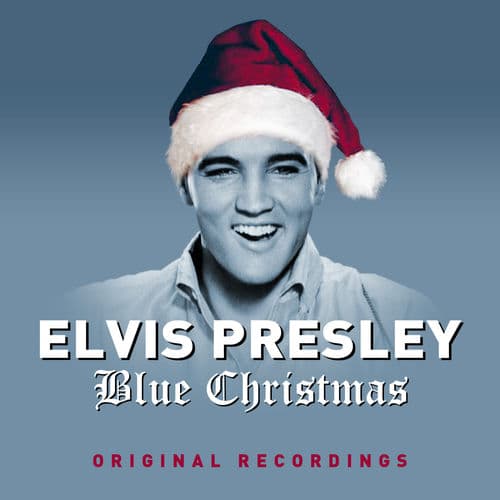
A LONELY CHRISTMAS FIREGLOWS IN BLUE
When Elvis Presley first released Blue Christmas on the 1957 LP Elvis’ Christmas Album, he transformed what had been a modest country‑seasonal ballad into a rock and roll lament that many now regard as the definitive holiday heartache. The recording took place on September 5, 1957 at Radio Recorders in Hollywood.
In its original run, Blue Christmas was not immediately issued as a single in the United States, yet the album as a whole became a major holiday touchstone. Over time, however, the song earned its own spotlight: a 1964 commercial single release in the U.S. (backed with “Wooden Heart”) and later pairings, which helped extend its reach and imprint on popular culture.
Blue Christmas resonates because it captures the ache of absence beneath the festive veneer. The song’s lyrics—lines like “I’ll be so blue just thinking about you” and “Decorations of red on our green Christmas tree won’t be the same dear if you’re not here with me” — expose a deep longing for a lost presence even as the world around readies for celebration. The contrast between holiday warmth and personal emptiness is rendered all the more poignant when delivered by Elvis.
Musically, Presley’s version departs from the earlier country‑tinged renditions. Backed by the close‑harmonies of The Jordanaires (and the soaring soprano of Millie Kirkham), the arrangement embraces subtle “blue notes”—minor and septimal intervals that refuse the brightness of standard major/minor thirds and instead evoke a quivering, unresolved sorrow. That harmonic tension becomes an inside lament for listeners attuned to nuance. In this way, the song does not simply recount heartbreak; it incarnates it, letting every chord and vocal inflection pulse with longing.
Over decades, Blue Christmas has outgrown its seasonal origins. It is no longer just a holiday album track. It returns annually to charts, radio playlists, and streaming services. Indeed in recent years it has re‑entered the U.S. singles chart, reaching the Top 20 on the Billboard Hot 100 — an extraordinary feat for a song recorded nearly seven decades ago.
That enduring longevity speaks to its emotional core. The song becomes a vessel for memory, loss, and the ache of solitude. For listeners who face another Christmas without someone dear the words can chill with truth. For others, the wistful melody may stir nostalgia for love that once felt evergreen.
In context of Elvis’s career, Blue Christmas reveals a different facet of the so-called “King of Rock and Roll.” It is not about swagger or youthful rebellion. It is quiet, vulnerable, and mature — offering proof that Presley could convey longing and sorrow with as much sincerity as he delivered rockabilly swagger or gospel fervor.
Each time Blue Christmas returns to playlists, each winter when its first quiet chords drift out over speakers, it offers not holiday cheer but honest reflection. It reminds us that beneath the tinsel and carols there can be heartache. It transforms a Christmas standard into a timeless portrait of loss.